

Women Intimate Care Market Size, Share, Growth, and Industry Analysis, By Type (Intimate Wash, Masks, Moisturizers & Creams, Hair Removal), By Application (Online Retailers, Hypermarket, Specialty Store), Regional Insights and Forecast to 2035
 Buy Now


Women Intimate Care Market Overview
The global Women Intimate Care Market is projected to expand steadily from USD 2378.55 Million in 2026 to USD 3009.15 Million by 2035, representing a CAGR of 2.65% during 2026-2035.
The Women Intimate Care Market is expanding as consumers place greater emphasis on daily hygiene, skin comfort, ingredient transparency, convenience, and products designed specifically for sensitive intimate areas. Approximately 45% of current market momentum is associated with increased awareness of specialized personal-care routines, improved product availability, and wider acceptance of purpose-built intimate hygiene products. Intimate Wash remains a core category, while Moisturizers & Creams, Masks, and Hair Removal products are gaining visibility as consumers adopt more complete care routines. Manufacturers are increasingly emphasizing mild formulations, dermatologically tested ingredients, fragrance-conscious products, pH-balanced concepts, and convenient packaging.
The United States represents an important national market because consumers have broad access to pharmacies, specialty personal-care stores, mass retailers, direct-to-consumer brands, and digital marketplaces offering intimate-care products. Approximately 21% of worldwide Women Intimate Care Market activity is associated with United States demand across hygiene, moisturization, grooming, and specialized skin-care products. Consumer preferences are increasingly influenced by ingredient transparency, convenience, discreet purchasing, and products positioned for sensitive skin. Online Retailers are particularly important because digital channels allow consumers to research private-care categories with greater discretion while comparing product claims and customer feedback before purchase.
Get Comprehensive Insights into the Market’s Size and Growth Trends
 Download FREE Sample
 Key Findings
- Market Driver: Rising awareness of specialized intimate hygiene and daily personal-care routines is supporting category adoption, with approximately 42% of market momentum linked to comfort, hygiene education, product accessibility, and greater consumer willingness to use dedicated formulations.
- Major Market Restraint: Product sensitivity concerns and uneven consumer awareness continue limiting wider usage, with approximately 17% of purchasing hesitation associated with irritation concerns, ingredient uncertainty, cultural barriers, and preference for conventional personal-care products.
- Emerging Trends: Mild formulations, pH-focused products, fragrance-conscious positioning, and ingredient transparency are reshaping product development, with approximately 31% of innovation activity increasingly focused on sensitive-skin compatibility and more specialized intimate-care routines.
- Regional Leadership: Asia-Pacific is expected to lead the Women Intimate Care Market with approximately 39% share, supported by large consumer populations, expanding personal-care spending, stronger digital retail access, and increasing awareness of specialized hygiene categories.
- Competitive Landscape: Manufacturers are broadening intimate hygiene and skin-care portfolios through specialist formulations and digital distribution, with Procter & Gamble estimated to represent approximately 19% of activity within the supplied competitive landscape.
- Market Segmentation: Intimate Wash is expected to remain the leading supplied Product Type with approximately 41% market share, while Online Retailers lead demand through discreet purchasing, broad assortment, convenient comparison, and direct access to specialist brands.
- Recent Development: Women intimate-care brands are increasing product specialization and digital-first launches, with approximately 26% of recent development activity emphasizing mild formulations, targeted moisturization, improved ingredient communication, and consumer education.
Latest Trends
Ingredient transparency and sensitive-skin positioning are becoming increasingly important as consumers evaluate intimate-care products with greater attention to formulation, fragrance, texture, and perceived skin compatibility. Approximately 31% of current product-development activity is focused on mild cleansing systems, pH-oriented positioning, botanical ingredients, fragrance-conscious concepts, and formulas designed for regular use. Intimate Wash products are increasingly marketed as part of routine personal hygiene rather than occasional specialty care, while Moisturizers & Creams are gaining attention among consumers seeking comfort and hydration. Brands are also simplifying ingredient communication so buyers can understand product purpose more easily.
Digital-first purchasing and educational content are also reshaping the category because consumers often prefer private and convenient channels when researching intimate-care products. Approximately 28% of channel-development activity is associated with direct-to-consumer websites, marketplace listings, social education, subscription programs, and digital product comparison. Online Retailers allow smaller specialist brands to compete alongside established manufacturers without requiring extensive physical shelf space. Consumer reviews and product explanations can also reduce uncertainty surrounding categories such as Masks or Moisturizers & Creams.
Market Dynamics
Driver
"Specialized hygiene awareness is strengthening intimate-care adoption."
Increasing awareness of specialized intimate hygiene represents the strongest structural driver for the Women Intimate Care Market. Approximately 42% of current market momentum is associated with consumers adopting products designed specifically for intimate areas rather than relying only on general body-care formulations. Intimate Wash products benefit most directly from this shift because they provide a clearly defined everyday hygiene function and are increasingly available through Online Retailers, Hypermarket channels, and Specialty Store environments. Better product education is also helping consumers understand differences between cleansing, moisturization, grooming, and occasional care, broadening demand beyond a single product format.Growing consumer spending on personal wellness and skin care is reinforcing this driver as intimate care becomes more closely integrated with wider self-care routines.
Restraint
"Sensitivity concerns and uneven awareness restrict broader category adoption."
Consumer concern regarding irritation, fragrance, ingredients, and unnecessary product use remains an important restraint within the Women Intimate Care Market. Approximately 17% of purchasing hesitation is associated with uncertainty regarding formulation suitability, particularly among consumers with sensitive skin or those unfamiliar with specialized intimate-care categories. Buyers increasingly scrutinize ingredient lists and may avoid products containing strong fragrance or formulations perceived as overly aggressive. Manufacturers therefore need clear usage guidance and transparent product communication to build trust while avoiding exaggerated claims that could undermine category credibility.Cultural sensitivity and inconsistent awareness also influence market development because intimate-care purchasing behavior varies significantly across regions, age groups, and retail environments.
Opportunity
"Expanded product routines create opportunities beyond basic cleansing."
Broader adoption of multi-step personal-care routines creates significant opportunity for Women Intimate Care manufacturers because consumers are increasingly exploring products beyond Intimate Wash. Approximately 33% of emerging commercial opportunity is associated with Moisturizers & Creams, Masks, grooming, and complementary care products that extend category participation. Manufacturers can encourage broader routines by clearly differentiating cleansing, hydration, soothing, and grooming functions. Product bundles can also increase basket size while helping consumers understand how multiple formats fit together without creating confusing or excessive routines.Online Retailers create another major opportunity because digital channels allow specialist companies to target consumers directly and explain product functionality in greater detail than limited physical shelf space permits.
Challenge
"Maintaining consumer trust requires careful formulation and communication."
Maintaining consumer trust represents a significant challenge because intimate-care products are used on sensitive areas and purchasing decisions can be strongly affected by concerns about irritation or misleading product claims. Approximately 25% of product-development complexity is associated with balancing cleansing performance, sensory experience, ingredient simplicity, and sensitive-skin positioning. Manufacturers must also ensure packaging and usage instructions explain intended application clearly. Products that create discomfort or appear overly fragranced can damage repeat-purchase potential, making formulation discipline particularly important in this category.Differentiation presents another challenge because established personal-care manufacturers and smaller specialist brands increasingly compete across similar themes including mildness, pH positioning, botanical ingredients, hydration, and convenience.
Women Intimate Care Market Segmentation
Get Comprehensive Insights on the Market Segmentation in this Report
Download FREE Sample
Get Comprehensive Insights on the Market Segmentation in this Report
Download FREE Sample By Types
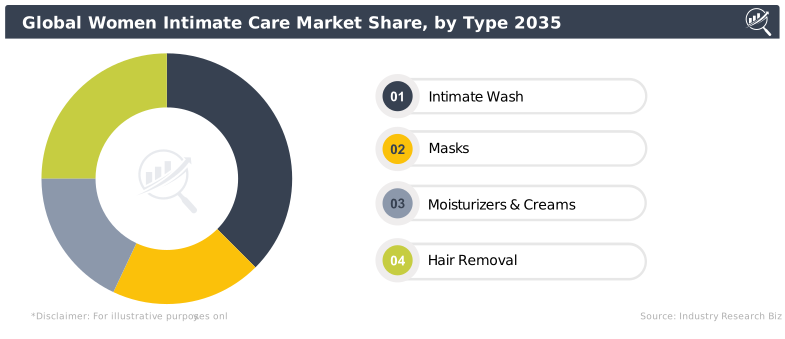
Intimate Wash: Intimate Wash leads the Women Intimate Care Market with approximately 41% market share, supported by widespread consumer familiarity, frequent usage, and increasing availability across Online Retailers, Hypermarket, and Specialty Store channels. These products are increasingly positioned for everyday hygiene and comfort, with manufacturers emphasizing mild cleansing systems, sensitive-skin suitability, pH-oriented formulations, and clear usage guidance. Intimate Wash also benefits from easier consumer understanding compared with newer formats because its purpose is straightforward and closely linked with routine personal care. Established personal-care companies and specialist brands are broadening the category through fragrance-conscious formulations, travel-friendly packaging, pump formats, and products designed for different age groups and lifestyle preferences.
Masks: Masks account for approximately 14% of the Women Intimate Care Market and represent a more specialized segment focused on occasional care, soothing, hydration, and premium self-care routines. Demand is concentrated among consumers already familiar with broader beauty and wellness trends who are willing to experiment with newer intimate-care formats. Online Retailers play an important role in category discovery because digital platforms provide space for detailed instructions, formulation explanations, and educational content that can reduce uncertainty around less familiar product types. Manufacturers are increasingly using individually packaged formats, gentle ingredients, and targeted positioning to differentiate Masks from everyday cleansing products and support occasional premium use.
Moisturizers & Creams: Moisturizers & Creams represent approximately 27% of market share as consumers increasingly seek products designed for hydration, comfort, dryness management, and daily skin care within intimate areas. The segment benefits from the broader shift toward specialized body-care routines and increased attention to skin barrier support. Manufacturers are emphasizing mild textures, dermatologically oriented positioning, fragrance-conscious formulas, and ingredients associated with hydration or soothing benefits. These products are especially suitable for Online Retailers and Specialty Store environments where buyers can compare formulations and read detailed product information. Continued consumer education is expected to strengthen adoption by clarifying the role of moisturization as distinct from cleansing.
Hair Removal: Hair Removal accounts for approximately 18% of the Women Intimate Care Market, supported by grooming preferences, convenience, and consumer demand for products designed specifically for sensitive areas. The segment includes solutions positioned to reduce irritation and simplify at-home grooming while providing more privacy than professional services. Manufacturers increasingly emphasize skin comfort, easier application, shorter usage time, and post-removal care to improve the consumer experience. Hair Removal products benefit from both Hypermarket and Online Retailers because shoppers can choose between immediate in-store purchases and discreet digital ordering. Product differentiation increasingly depends on gentleness, ease of use, and compatibility with broader intimate-care routines.
By Applications
Online Retailers: Online Retailers lead the Women Intimate Care Market with approximately 44% market share, supported by discreet purchasing, broad product choice, direct-to-consumer brands, subscription options, and access to detailed formulation information. Digital channels are particularly well suited to intimate-care categories because consumers can research products privately without depending on physical shelf availability or in-store conversations. Online platforms also allow specialist brands to compete with large personal-care companies through targeted marketing, educational content, and customer reviews. Consumers increasingly compare ingredients, usage instructions, and product formats before purchase, making digital information quality an important influence on conversion and repeat ordering.
Hypermarket: Hypermarket accounts for approximately 33% of market demand and remains important because consumers can purchase intimate-care products alongside other personal-care and household essentials. Large-format retailers offer visibility, convenience, and established brand trust, making them particularly influential for mainstream Intimate Wash, Hair Removal, and Moisturizers & Creams products. Promotional displays and bundled discounts can encourage trial among shoppers who may not actively search for specialist intimate-care products online. Hypermarket also provides immediate product availability, which remains valuable for consumers who prefer physical purchases or want to compare packaging and size before selecting a product.
Specialty Store: Specialty Store represents approximately 23% of Women Intimate Care Market demand, supported by consumers seeking focused personal-care ranges, professional guidance, premium formulations, and greater confidence in product selection. Specialty retailers can devote more attention to product education than general retail channels and often stock targeted or premium intimate-care brands that may have limited mass-market distribution. The channel is particularly relevant for Moisturizers & Creams and newer formats such as Masks, where shoppers may value assistance understanding product purpose and application. Specialty Store environments also support premium positioning through curated assortments and stronger emphasis on ingredient quality.
Women Intimate Care Market Regional Outlook
Get Comprehensive Insights into the Market’s Size and Growth Trends
Download FREE Sample North America
North America accounts for approximately 24% of the Women Intimate Care Market, supported by high personal-care spending, extensive digital retail infrastructure, strong consumer awareness, and broad availability of specialist hygiene products. The United States contributes most regional demand, while Canada supports continued category development through pharmacies, online platforms, mass retailers, and premium personal-care channels. Consumers increasingly evaluate products according to ingredient transparency, fragrance profile, convenience, and skin compatibility rather than relying only on traditional brand familiarity.
Digital-first purchasing is particularly important across the region, with approximately 37% of product discovery increasingly influenced by online reviews, educational content, subscription offers, and direct-to-consumer marketing. Specialist brands can reach consumers without extensive physical distribution, while established companies use digital platforms to introduce new formulations and targeted routines. Privacy and convenience also make online shopping particularly suitable for intimate-care categories, strengthening repeat purchases across multiple product types.
Europe
Europe represents approximately 22% of the Women Intimate Care Market, supported by mature personal-care industries, strong pharmacy networks, growing interest in sensitive-skin products, and consumer preference for transparent formulation information. The United Kingdom, Germany, France, Italy, Spain, and Nordic markets remain important regional demand centers. European consumers increasingly favor mild products with clear ingredient communication and limited unnecessary fragrance, particularly in categories positioned for regular intimate use.
Approximately 30% of regional product-development emphasis is associated with sensitive-skin compatibility, ingredient simplification, recyclable packaging, and more responsible product positioning. Specialty Store and pharmacy-style channels remain important for consumers seeking reassurance and targeted guidance, while Online Retailers continue expanding access to smaller brands. Manufacturers serving Europe increasingly differentiate through formulation credibility and clear functional positioning rather than highly promotional marketing alone.
Asia-Pacific
Asia-Pacific leads the Women Intimate Care Market with approximately 39% market share, supported by large consumer populations, expanding middle-income households, increasing urbanization, stronger e-commerce penetration, and rising awareness of specialized personal-care routines. China, Japan, India, South Korea, and Southeast Asian markets contribute to regional demand through different retail structures and cultural preferences. Intimate Wash remains an important entry category, while Moisturizers & Creams and Hair Removal products are gaining visibility among younger urban consumers.
Regional growth is strongly connected with digital commerce, with approximately 42% of new product discovery increasingly taking place through online marketplaces, social content, mobile commerce, and direct-to-consumer channels. Online Retailers provide important advantages in markets where physical shelf space for intimate-care products remains limited. Local and international manufacturers are also adapting packaging, fragrance levels, textures, and communication styles to match different consumer expectations across diverse Asian markets.
Middle East and Africa
Middle East and Africa account for approximately 8% of the Women Intimate Care Market, with demand concentrated in urban populations, premium personal-care segments, pharmacy channels, and growing online retail environments. Gulf markets show comparatively stronger adoption because consumers have higher access to international brands and organized personal-care retail. African demand remains more varied but is developing in major cities where digital commerce and modern retail improve availability of specialist hygiene products.
Approximately 21% of emerging regional adoption is associated with consumer education, discreet digital purchasing, and greater availability of gentle formulations designed for regular use. Cultural sensitivity remains important, making clear and respectful product communication essential. Online Retailers are particularly valuable in expanding access because consumers can explore products privately while avoiding the limited assortment that may be available in smaller physical stores.
Rest of the World
Rest of the World represents approximately 7% of the Women Intimate Care Market, covering smaller Latin American, island, and developing consumer markets where category awareness is still expanding. Demand is influenced by broader growth in personal-care spending, smartphone usage, e-commerce access, and exposure to international beauty and wellness trends. Intimate Wash typically provides an accessible introduction to the category because consumers understand its basic hygiene purpose more easily than specialized formats.
Approximately 18% of new category growth across these markets is linked to e-commerce expansion and wider distribution of established personal-care brands. Consumers increasingly gain access to products that were previously limited to premium urban retailers or imported specialist stores. Future growth will depend on affordability, product education, culturally appropriate communication, and the ability of manufacturers to offer simple formulations and pack sizes suited to different household budgets.
List of Top Women Intimate Care Market Companies
- Procter & Gamble
- Himalaya Drug
- Unicharm
- Kimberly-Clark
- Elif Cosmetics
- Nölken Hygiene Products
- Johnson & Johnson Services
- Ciaga
- Zeta Farmaceutici
- Edgewell Personal Care
- Emilia Personal Care
- Nua Woman
- Kao Corporation
- Bodywiseuk
Top Two Companies with Highest Market Share
- Procter & Gamble: Procter & Gamble is estimated to represent approximately 19% of activity within the supplied competitive landscape, supported by extensive consumer-product distribution, strong retail relationships, brand-development capabilities, and broad experience in women-focused hygiene categories.
- Johnson & Johnson Services: Johnson & Johnson Services is estimated to account for approximately 14% of activity within the supplied competitive landscape, supported by established expertise in personal care, skin-focused product development, consumer trust, and extensive distribution capabilities. Its positioning aligns with demand for products emphasizing gentleness, clear usage guidance, and skin compatibility.
Investment Analysis and Opportunities
Investment in the Women Intimate Care Market is increasingly directed toward gentle formulations, digital retail, ingredient transparency, premium moisturization, and consumer education. Approximately 34% of strategic investment activity is associated with product platforms designed around sensitive-skin compatibility, simplified ingredient communication, targeted hydration, and discreet purchasing experiences. Manufacturers are investing in formulation research, dermatological testing, packaging improvement, and digital content that helps consumers understand differences between Intimate Wash, Masks, Moisturizers & Creams, and Hair Removal.
Emerging consumer markets create additional opportunity as awareness of specialized personal care expands alongside smartphone usage and modern retail infrastructure. Approximately 29% of future investment potential is associated with localized formulations, smaller pack sizes, educational campaigns, mobile commerce, and broader distribution across Asia-Pacific and developing urban markets. Manufacturers that adapt fragrance levels, textures, packaging, and communication to local preferences can improve adoption while maintaining consistent brand positioning. Investment in subscription services and bundled routines can also support repeat purchasing by helping consumers combine cleansing, moisturization, and grooming products within structured personal-care regimens.
New Product Development
New product development is increasingly focused on mild cleansing systems, pH-oriented formulations, fragrance-conscious products, targeted moisturization, and clearer ingredient communication. Approximately 26% of recent development activity emphasizes sensitive-skin compatibility, improved hydration, simplified formulations, and products designed for regular intimate-care routines. Procter & Gamble, Johnson & Johnson Services, Himalaya Drug, Unicharm, Kimberly-Clark, Kao Corporation, Nua Woman, and other supplied companies operate in a market where consumers increasingly expect specialized functionality rather than generic personal-care positioning. Brands are therefore refining textures, dispensing formats, packaging sizes, and usage instructions to make products easier to understand and integrate into everyday routines.
Digital-first product launches are also becoming more influential because manufacturers can test new formats and gather customer feedback more rapidly through Online Retailers. Approximately 24% of next-generation product activity is associated with direct-to-consumer launches, subscription-friendly packaging, educational content, and personalized recommendations. Online channels are especially useful for introducing newer formats such as Masks and targeted Moisturizers & Creams because brands can provide detailed explanations without relying solely on limited physical shelf space.
Five Recent Developments
- January 2026 – Mild Intimate Wash Formulations Expand: Women intimate-care brands increased focus on gentler everyday cleansing, with approximately 26% of recent formulation activity emphasizing sensitive-skin compatibility, clearer ingredient communication, and reduced reliance on strongly fragranced positioning.
- March 2026 – Online Retail Broadens Product Discovery: Manufacturers strengthened digital distribution and educational content, with approximately 28% of channel-development initiatives focusing on discreet purchasing, detailed product explanations, subscriptions, and easier comparison across intimate-care formats.
- May 2026 – Targeted Moisturization Gains Consumer Attention: Brands expanded specialized skin-comfort products, with approximately 23% of new product initiatives focusing on hydration, soothing textures, and Moisturizers & Creams designed for sensitive intimate-care routines.
- July 2026 – Hair Removal Products Emphasize Gentleness: Product developers increased focus on at-home grooming comfort, with approximately 21% of Hair Removal innovation emphasizing easier application, reduced irritation concerns, and improved compatibility with sensitive skin.
- September 2026 – Specialty Care Bundles Support Routine Building: Brands expanded coordinated product sets, with approximately 25% of merchandising initiatives combining cleansing, moisturization, grooming, and educational guidance to encourage broader participation across multiple intimate-care categories.
Report Coverage
The Women Intimate Care Market report evaluates the supplied Product Types of Intimate Wash, Masks, Moisturizers & Creams, and Hair Removal across Online Retailers, Hypermarket, and Specialty Store applications. Intimate Wash represents approximately 41% of the Product Type allocation, reflecting strong consumer familiarity, frequent use, widespread availability, and clear positioning within everyday hygiene routines. The coverage examines sensitive-skin formulation, ingredient transparency, moisturization, grooming, digital retail, discreet purchasing, subscription models, packaging, consumer education, product differentiation, and the expansion of intimate care from basic cleansing toward broader personal-care routines.
The regional assessment covers North America, Europe, Asia-Pacific, Middle East and Africa, and Rest of the World, with Asia-Pacific representing approximately 39% of the regional market allocation. Competitive coverage includes Procter & Gamble, Himalaya Drug, Unicharm, Kimberly-Clark, Elif Cosmetics, Nölken Hygiene Products, Johnson & Johnson Services, Ciaga, Zeta Farmaceutici, Edgewell Personal Care, Emilia Personal Care, Nua Woman, Kao Corporation, and Bodywiseuk.
Women Intimate Care Market Report Coverage
| REPORT COVERAGE | DETAILS | |
|---|---|---|
|
Market Size Value In |
USD 2378.55 Million in 2026 |
|
|
Market Size Value By |
USD 3009.15 Million by 2035 |
|
|
Growth Rate |
CAGR of 2.65% from 2026-2035 |
|
|
Forecast Period |
2026 - 2035 |
|
|
Base Year |
2025 |
|
|
Historical Data Available |
Yes |
|
|
Regional Scope |
Global |
|
|
Segments Covered |
By Type :
By Application :
|
|
|
To Understand the Detailed Market Report Scope & Segmentation
Download FREE Sample
|
||
Frequently Asked Questions
The global Women Intimate Care Market is expected to reach USD 3009.15 Million by 2035.
The Women Intimate Care Market is expected to exhibit a CAGR of 2.65% by 2035.
Procter & Gamble, Himalaya Drug, Unicharm, Kimberly-Clark, Elif Cosmetics, Nölken Hygiene Products, Johnson & Johnson Services, Ciaga, Zeta Farmaceutici, Edgewell Personal Care, Emilia Personal Care, Nua Woman, Kao Corporation, Bodywiseuk
In 2026, the Women Intimate Care Market value will reach at USD 2378.55 Million.

Related Reports

Our Clients






























.svg)
