

Soda Fountain Machines Market Size, Share, Growth, and Industry Analysis, By Type (Lever Soda Fountain Machines, Push Button Soda Fountain Machines), By Application (Restaurant, Cinema, Others), Regional Insights and Forecast to 2035
 Buy Now


Soda Fountain Machines Market Overview
The global Soda Fountain Machines Market is projected to experience sustained growth from USD 1540.69 Million in 2026 to USD 2723.97 Million by 2035, exhibiting a CAGR of 6.54% during the forecast period 2026-2035.
The Soda Fountain Machines Market is expanding as restaurants, cinemas, quick-service outlets, food courts, entertainment venues, and other beverage-serving establishments increase demand for efficient dispensing systems capable of delivering consistent portions and faster customer service. Approximately 49% of current market momentum is associated with higher beverage throughput, labor efficiency, portion consistency, and the need to serve multiple drink options from compact counter areas. Modern machines increasingly combine chilled dispensing, carbonation control, syrup management, simplified cleaning, and user-friendly interfaces within integrated units. Push Button Soda Fountain Machines are gaining attention where operators prioritize speed and standardized dispensing, while Lever Soda Fountain Machines remain important in locations that value straightforward mechanical operation.
The United States remains an important national market because restaurants, cinemas, convenience-oriented foodservice operators, entertainment venues, and institutional dining locations maintain widespread fountain beverage infrastructure. Approximately 20% of worldwide Soda Fountain Machines Market activity is associated with United States demand across replacement installations, new restaurant openings, beverage-system upgrades, and high-throughput dispensing environments. Operators increasingly require equipment that can maintain drink consistency during peak periods while reducing service time and staff intervention. Push-button designs are particularly attractive for self-service or fast-service formats, whereas lever-operated systems continue to serve locations prioritizing simplicity and direct user control.
Get Comprehensive Insights into the Market’s Size and Growth Trends
 Download FREE Sample
 Key Findings
- Market Driver: Expansion of quick-service dining and high-volume beverage service is accelerating equipment adoption, with approximately 47% of market momentum linked to faster dispensing, consistent portions, labor efficiency, and improved customer throughput.
- Major Market Restraint: Maintenance requirements and dependence on reliable syrup, carbonation, and cooling systems continue limiting adoption, with approximately 21% of operating pressure associated with cleaning, servicing, component wear, and installation complexity.
- Emerging Trends: Touchless operation, digital controls, improved cooling efficiency, and simplified cleaning are reshaping machine design, with approximately 35% of technology-development activity increasingly focused on automation, hygiene, and easier beverage-system management.
- Regional Leadership: Asia-Pacific is expected to lead the Soda Fountain Machines Market with approximately 34% share, supported by expanding foodservice chains, urban dining growth, cinema development, and increasing installation of modern beverage dispensing equipment.
- Competitive Landscape: Manufacturers are strengthening modular dispensing platforms, service networks, and equipment reliability, with Cornelius estimated to represent approximately 18% of activity within the supplied competitive landscape across commercial beverage installations.
- Market Segmentation: Push Button Soda Fountain Machines are expected to remain the leading supplied Product Type with approximately 56% market share, while Restaurant applications dominate demand through frequent use and high beverage-serving volumes.
- Recent Development: Soda fountain equipment providers are improving sanitation, cooling, and dispensing controls, with approximately 29% of recent product-development activity emphasizing easier cleaning, more consistent carbonation, and simplified operator maintenance.
Latest Trends
Automation and hygiene-oriented design are becoming increasingly important as foodservice operators seek beverage systems that require less manual intervention while maintaining consistent drink quality. Approximately 35% of current technology-development activity is focused on touchless dispensing concepts, programmable portion controls, digital monitoring, improved sanitation features, and easier cleaning procedures. Push Button Soda Fountain Machines particularly benefit from this trend because standardized controls can reduce dispensing variation and improve service speed during busy operating periods. Manufacturers are also redesigning nozzles, drip trays, syrup connections, and internal fluid pathways to simplify daily cleaning.
Energy efficiency and compact system design are also influencing equipment development as restaurants and cinemas attempt to manage operating costs while maximizing limited counter space. Approximately 30% of product-modernization activity is associated with improved refrigeration systems, compact internal layouts, modular components, reduced water usage, and easier integration with existing beverage infrastructure. Operators increasingly prefer machines that can support multiple drink choices without requiring separate dispensing stations for each beverage. Modular designs also make component servicing more practical because specific valves, pumps, or cooling elements can be replaced without removing the entire system from service.
Market Dynamics
Driver
"High-volume foodservice is accelerating demand for efficient beverage dispensing."
Expansion of quick-service restaurants, casual dining, cinema concessions, food courts, and other high-throughput service formats represents the strongest structural driver for the Soda Fountain Machines Market. Approximately 47% of current market momentum is associated with operators seeking faster beverage service, standardized portions, reduced manual preparation, and efficient use of counter space. Fountain machines allow establishments to serve multiple carbonated beverages through a compact system while connecting to centralized syrup and carbonation infrastructure. This operating model can reduce the need to store large quantities of individual packaged drinks near the service counter while improving serving speed during busy meal and entertainment periods.Changing service models are reinforcing this driver as operators increase self-service and semi-automated beverage stations.
Restraint
"Maintenance and sanitation requirements increase operating complexity."
Maintenance remains an important restraint because soda fountain systems depend on multiple connected components including syrup lines, carbonation equipment, cooling systems, valves, pumps, nozzles, and drainage areas. Approximately 21% of operating pressure is associated with cleaning requirements, component wear, service interruptions, and the need for trained maintenance support. Poorly maintained systems can create inconsistent beverage quality or increase downtime, making routine cleaning and preventive servicing essential. Smaller restaurants may hesitate to install complex dispensing platforms if they lack staff capacity or technical support for regular upkeep.Installation requirements create additional restraint because machines must often connect with water, electricity, refrigeration, carbon dioxide, syrup storage, and drainage infrastructure.
Opportunity
"Expanding foodservice networks create new equipment installation opportunities."
Growth of restaurant chains, cinema networks, food courts, and organized hospitality creates significant opportunity for soda fountain machine suppliers because expanding operators require standardized beverage systems across multiple locations. Approximately 33% of emerging commercial opportunity is associated with multi-site installations where customers prioritize consistent equipment configuration, maintenance procedures, and beverage quality across their networks. Manufacturers that provide scalable systems and reliable service support can build recurring relationships as customers open additional outlets or replace older machines. Standardized equipment also simplifies staff training and spare-parts management across large operating portfolios.Emerging urban markets provide another opportunity as organized foodservice expands and consumers increasingly purchase meals and beverages outside the home.
Challenge
"Consistent beverage quality requires precise system control."
Maintaining consistent taste and carbonation across repeated servings remains a technical challenge because fountain beverage quality depends on syrup ratio, water conditions, temperature, carbonation, line cleanliness, and equipment calibration. Approximately 24% of quality-control difficulty is associated with keeping these operating variables within suitable conditions throughout daily service. High customer volumes can place greater stress on refrigeration and carbonation systems, especially during peak periods. Manufacturers therefore continue improving controls and cooling performance to maintain stable output when machines operate continuously.Service availability creates another challenge because downtime can immediately affect beverage sales in restaurants and cinemas. This makes after-sales support an important competitive factor alongside machine features, capacity, and purchase cost.
Soda Fountain Machines Market Segmentation
Get Comprehensive Insights on the Market Segmentation in this Report
Download FREE Sample
Get Comprehensive Insights on the Market Segmentation in this Report
Download FREE Sample By Types
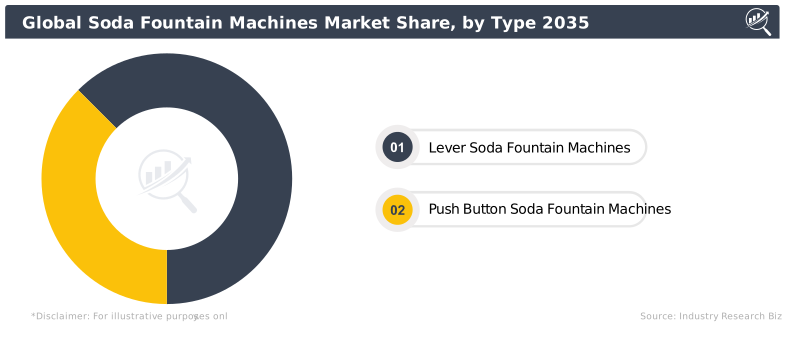
Lever Soda Fountain Machines: Lever Soda Fountain Machines account for approximately 44% of the Soda Fountain Machines Market and remain important across restaurants, smaller foodservice establishments, concession counters, and locations that prefer straightforward mechanical dispensing. Lever-operated systems provide direct user control and can be attractive where operators prioritize simplicity, familiar operation, and relatively uncomplicated maintenance. These machines are commonly selected for environments where beverage volumes are consistent but highly sophisticated digital controls are not essential. Manufacturers are improving valve durability, refrigeration performance, nozzle design, and cleaning access while preserving the basic operating format that makes lever equipment easy for staff and customers to understand.
Push Button Soda Fountain Machines: Push Button Soda Fountain Machines lead the supplied Product Types with approximately 56% market share, supported by demand for faster service, standardized dispensing, easier self-service operation, and compatibility with modern quick-service formats. Push-button interfaces allow customers or staff to select beverages rapidly without manipulating mechanical levers, making them suitable for busy restaurants, cinemas, food courts, and entertainment venues. Modern designs increasingly combine digital portion control, programmable settings, improved cooling, simplified sanitation, and multiple flavor options within compact dispensing stations. Operators value the ability to maintain more consistent beverage portions during peak service periods while reducing unnecessary product waste.
By Applications
Restaurant: Restaurant applications dominate the Soda Fountain Machines Market with approximately 52% market share because quick-service restaurants, casual dining chains, cafeterias, food courts, and other eating establishments serve large volumes of carbonated beverages throughout the day. Fountain systems provide efficient access to several drink selections while reducing reliance on individual bottles or cans at service counters. Restaurants increasingly prioritize equipment capable of maintaining consistent carbonation, temperature, syrup ratio, and serving speed during busy periods. Push Button Soda Fountain Machines are particularly attractive for self-service dining environments, while Lever Soda Fountain Machines remain relevant for staff-operated counters.
Cinema: Cinema applications represent approximately 29% of market demand, supported by high beverage consumption during movie screenings, large concession areas, and strong demand for rapid customer throughput before scheduled showtimes. Soda fountain machines allow cinema operators to serve multiple beverages from compact counters while maintaining standardized cup preparation. Large beverage sizes and concentrated purchasing periods make reliable cooling and dispensing speed especially important in this environment. Equipment designed for continuous operation can help concession teams reduce queues and maintain product availability during peak evening and weekend periods.
Others: Others account for approximately 19% of the Soda Fountain Machines Market and include entertainment venues, institutional dining, convenience-oriented foodservice, amusement locations, stadium concessions, hospitality facilities, and other beverage-serving environments outside conventional restaurants and cinemas. These users often require machines tailored to available counter space, expected serving volume, customer traffic patterns, and cleaning resources. Compact systems are attractive for smaller locations, while high-capacity configurations serve venues experiencing short periods of intense demand. Manufacturers offering modular dispensing options can address a broad range of installations while helping operators choose appropriate refrigeration capacity, beverage selection, and control formats according to their operating requirements.
Soda Fountain Machines Market Regional Outlook
Get Comprehensive Insights into the Market’s Size and Growth Trends
Download FREE Sample North America
North America accounts for approximately 29% of the Soda Fountain Machines Market, supported by established quick-service restaurant networks, extensive cinema infrastructure, convenience-oriented dining, and widespread consumer familiarity with fountain beverages. The United States contributes most regional demand, while Canada adds steady equipment replacement and foodservice expansion. Restaurants frequently maintain multiple soda stations in high-traffic locations, creating recurring demand for refrigeration systems, dispensing valves, syrup connections, and replacement machines.
Technology modernization is strengthening regional demand, with approximately 38% of equipment-upgrade activity emphasizing digital controls, easier sanitation, energy-efficient cooling, and more consistent beverage dispensing. Large restaurant chains increasingly prefer standardized platforms that can be deployed across multiple locations while simplifying staff training and maintenance. Equipment suppliers with strong service networks also benefit because high-volume operators require rapid technical support when dispensing systems experience failures or calibration problems.
Europe
Europe represents approximately 22% of global market demand, supported by restaurant chains, cinemas, leisure facilities, travel hubs, and growing adoption of modern beverage-service equipment. The United Kingdom, Germany, France, Italy, Spain, and other developed foodservice markets contribute to regional installation and replacement activity. European operators increasingly evaluate equipment according to energy efficiency, hygiene, compact design, and ease of maintenance because many urban locations operate with limited service-counter space. Push-button systems are gaining attention where self-service formats are expanding, while conventional lever designs remain common across traditional hospitality settings.
Approximately 28% of regional equipment-development emphasis is associated with lower energy consumption, simplified cleaning, efficient refrigeration, and reduced water usage. These priorities are encouraging manufacturers to improve insulation, compressor performance, and fluid-system design without increasing machine footprint. Restaurants and cinemas also value modular components that can be serviced quickly because minimizing equipment downtime is important when beverage sales form a regular part of foodservice operations.
Asia-Pacific
Asia-Pacific leads the Soda Fountain Machines Market with approximately 34% market share, supported by rapid expansion of quick-service restaurants, shopping-center food courts, cinema chains, entertainment destinations, and organized hospitality across China, India, Japan, South Korea, Southeast Asia, and Australia. Urbanization and changing dining habits are increasing demand for standardized beverage systems capable of supporting high customer volumes. Restaurant chains entering new cities often install modern fountain machines as part of standardized outlet designs, creating opportunities for suppliers providing reliable commercial equipment and after-sales support.
Approximately 40% of regional installation growth is associated with newly opened foodservice and entertainment locations adopting compact, high-throughput dispensing systems. Customers increasingly seek machines that can support several beverage options without consuming excessive counter space. Local equipment manufacturing and distribution are also increasing competition, encouraging suppliers to differentiate through service reliability, energy efficiency, digital controls, and easier sanitation rather than relying only on equipment price.
Middle East and Africa
Middle East and Africa account for approximately 8% of the Soda Fountain Machines Market, with demand concentrated in restaurant chains, shopping malls, cinemas, hotels, entertainment venues, and expanding urban foodservice networks. Gulf countries represent an important regional opportunity because premium shopping and leisure developments frequently incorporate large-scale dining and cinema facilities. African demand is developing across major cities where international and regional restaurant chains are expanding modern beverage-service infrastructure.
Approximately 23% of emerging regional equipment demand is associated with new commercial developments requiring dependable cooling and high-capacity dispensing in warm operating environments. Equipment durability and refrigeration performance are therefore particularly important. Suppliers that provide training, spare parts, and dependable maintenance support can strengthen adoption because some markets have fewer specialized beverage-equipment service providers than mature North American or European foodservice markets.
Rest of the World
Rest of the World represents approximately 7% of the Soda Fountain Machines Market and includes smaller Latin American, island, and developing foodservice markets where organized restaurant and entertainment infrastructure is expanding gradually. Demand is supported by shopping centers, restaurant franchises, tourism destinations, cinemas, and institutional foodservice operations. Buyers often prioritize equipment that combines reasonable acquisition cost with simple maintenance because technical support may be less readily available outside major urban centers.
Approximately 19% of new adoption across these markets is linked to restaurant franchising, tourism development, and modernization of concession operations. Compact machines with straightforward installation requirements can perform particularly well where operators are transitioning from packaged beverages toward fountain dispensing for the first time. Wider availability of standardized syrup, carbonation, and service infrastructure can further support equipment adoption as regional foodservice markets become more organized.
List of Top Soda Fountain Machines Market Companies
- Lancer
- Cornelius
- Manitowoc
- Zikool
- Himalay Soda Fountain
- Planet Soda Machine
- Cool Star
- Softy and Soda
- Real Beverage
- Soda Parts
Top Two Companies with Highest Market Share
- Cornelius: Cornelius is estimated to represent approximately 18% of activity within the supplied competitive landscape, supported by commercial beverage dispensing expertise, broad foodservice relationships, modular machine platforms, and strong installation capabilities. Its positioning benefits from demand across Restaurant, Cinema, and other high-volume beverage environments where equipment reliability, refrigeration consistency, sanitation access, and service support influence purchasing decisions.
- Lancer: Lancer is estimated to account for approximately 16% of activity within the supplied competitive landscape, supported by established experience in beverage dispensing equipment, fountain system design, cooling technologies, and commercial foodservice applications. Its competitive strength is reinforced by demand for reliable Push Button Soda Fountain Machines and Lever Soda Fountain Machines that can operate during extended service periods.
Investment Analysis and Opportunities
Investment in the Soda Fountain Machines Market is increasingly directed toward automation, improved refrigeration, sanitation, digital controls, and modular equipment configurations. Approximately 36% of strategic investment activity is associated with systems designed to improve beverage consistency while lowering manual intervention and routine maintenance requirements. Restaurant chains and Cinema operators are particularly interested in machines that can deliver reliable performance during concentrated customer traffic while simplifying cleaning and component servicing. Manufacturers investing in standardized platforms can also improve production efficiency while offering several machine configurations built around common internal components.
Emerging foodservice markets create additional opportunities as organized restaurants, cinemas, malls, and entertainment venues expand into secondary cities and developing urban centers. Approximately 31% of future installation opportunity is associated with new commercial locations requiring compact dispensing equipment and dependable cooling capacity. Manufacturers that combine affordable system configurations with strong local distribution and maintenance support can improve adoption in these markets.
New Product Development
New product development is increasingly focused on easier sanitation, digital controls, improved refrigeration performance, and more consistent dispensing. Approximately 29% of recent product-development activity emphasizes simplified cleaning, automated portion management, improved carbonation control, and components designed for quicker servicing. Manufacturers are redesigning dispensing heads, valves, drip trays, and internal fluid paths to reduce maintenance time while supporting hygienic operation. Push Button Soda Fountain Machines are receiving particular attention because digital interfaces can support standardized operation while giving restaurants and cinemas greater control over beverage selection and service speed.
Compact modular systems represent another important development area, with approximately 27% of next-generation design activity focused on reducing equipment footprint while maintaining multiple beverage selections. Restaurants increasingly need machines that fit within constrained service counters without sacrificing cooling capacity or dispensing speed. Manufacturers are responding with more efficient internal layouts, modular syrup connections, accessible refrigeration components, and simplified installation requirements.
Five Recent Developments
- January 2026 – Digital Dispensing Controls Expand Across Systems: Manufacturers increased integration of programmable controls, with approximately 29% of recent product-development activity emphasizing more consistent portions, simplified user interfaces, and easier operating adjustments.
- March 2026 – Sanitation Features Improve Machine Maintenance: Equipment suppliers strengthened cleaning-oriented designs, with approximately 26% of engineering improvements focused on accessible nozzles, removable components, simplified fluid pathways, and easier daily sanitation procedures.
- May 2026 – Compact Fountain Designs Gain Wider Adoption: Commercial operators increasingly selected space-efficient equipment, with approximately 24% of new system configurations emphasizing smaller footprints while maintaining multiple beverage selections and dependable cooling performance.
- July 2026 – Cooling Efficiency Becomes Design Priority: Manufacturers upgraded refrigeration and thermal-management components, with approximately 28% of modernization initiatives focused on maintaining consistent beverage temperature while reducing unnecessary energy consumption during extended operation.
- September 2026 – Modular Components Support Faster Servicing: New dispensing platforms incorporated easier-to-replace internal assemblies, with approximately 23% of equipment-development activity emphasizing reduced downtime, simplified maintenance, and faster component replacement in commercial foodservice environments.
Report Coverage
The Soda Fountain Machines Market report evaluates Lever Soda Fountain Machines and Push Button Soda Fountain Machines across Restaurant, Cinema, and Others applications. Push Button Soda Fountain Machines represent approximately 56% of the Product Type allocation, supported by faster dispensing, standardized operation, self-service suitability, and growing integration of digital controls. The coverage examines refrigeration performance, carbonation management, syrup handling, sanitation, maintenance, equipment footprint, automated dispensing, service reliability, replacement demand, and the modernization of beverage systems across commercial foodservice environments.
The regional assessment covers North America, Europe, Asia-Pacific, Middle East and Africa, and Rest of the World, with Asia-Pacific representing approximately 34% of the regional market allocation. Competitive coverage includes Lancer, Cornelius, Manitowoc, Zikool, Himalay Soda Fountain, Planet Soda Machine, Cool Star, Softy and Soda, Real Beverage, and Soda Parts. The report further evaluates investment opportunities, machine modernization, digital controls, compact equipment design, sanitation improvements, cooling efficiency, restaurant expansion, cinema installations, service-network development, and changing requirements across commercial fountain beverage operations.
Soda Fountain Machines Market Report Coverage
| REPORT COVERAGE | DETAILS | |
|---|---|---|
|
Market Size Value In |
USD 1540.69 Million in 2026 |
|
|
Market Size Value By |
USD 2723.97 Million by 2035 |
|
|
Growth Rate |
CAGR of 6.54% from 2026-2035 |
|
|
Forecast Period |
2026 - 2035 |
|
|
Base Year |
2025 |
|
|
Historical Data Available |
Yes |
|
|
Regional Scope |
Global |
|
|
Segments Covered |
By Type :
By Application :
|
|
|
To Understand the Detailed Market Report Scope & Segmentation
Download FREE Sample
|
||
Frequently Asked Questions
The global Soda Fountain Machines Market is expected to reach USD 2723.97 Million by 2035.
The Soda Fountain Machines Market is expected to exhibit a CAGR of 6.54% by 2035.
Lancer, Cornelius, Manitowoc, Zikool, Himalay Soda Fountain, Planet Soda Machine, Cool Star, Softy and Soda, Real Beverage, Soda Parts
In 2026, the Soda Fountain Machines Market value will reach at USD 1540.69 Million.

Related Reports

Our Clients






























.svg)
