

Lemongrass Oil Market Size, Share, Growth, and Industry Analysis, By Type (Therapeutic Grade,Food Grade), By Application (Personal Care Products,Food and Beverages,Pharmaceuticals,Aromatherapy Products), Regional Insights and Forecast to 2035
 Buy Now


Lemongrass Oil Market Overview
The global Lemongrass Oil Market size is projected to grow from 61285.03 million in 2026 to 67382.9 million in 2027, reaching 143879.47 million by 2035, expanding at a CAGR of 9.95% during the forecast period.
The global Lemongrass Oil Market Overview shows a global market size reaching approximately 50.29 million in 2023, rising to 55.11 million in 2024, highlighting substantial tonnage flows in essential oil production and supply. Domestic production volumes exceed 138.02 tonnes in 2023, underscoring high-volume crop extraction for essential oil use. Exports from major producing countries include 2,897 shipments from India, 302 from Vietnam, and 168 from the United States over a year, evidencing high global trade movement. The Lemongrass Oil Market Report reveals how tonnage volumes, shipment counts, and production figures frame the competitive landscape and supply chain infrastructure in terms of real-world numerical flow.
In the USA Lemongrass Oil Market Analysis, domestic consumption and production demonstrate significant activity, with 707 import shipments received in a year, placing the USA as the second largest importer globally. Production and export figures show the U.S. contributing 168 export shipments, positioning it among the top three global exporters alongside India and Vietnam. North American imports account for 44.18 % of Indian lemongrass oil export volume, indicating strong U.S. and Canada demand. Aromatherapy and personal care applications consume large tonnages, as consumer wellness interest rises. The Lemongrass Oil Market Insights for the USA thus reflect substantial importation, domestic production, and supply flow metrics in a high-volume essential-oil ecosystem.
Get Comprehensive Insights into the Market’s Size and Growth Trends
 Download FREE Sample
 Key Findings
- Key Market Driver: Around 38 % of global lemongrass oil demand is driven by personal care and aromatherapy applications, with Europe consuming the majority share.
- Major Market Restraint: Nearly 16 % of supply risk is tied to heavy dependence on India, Vietnam, and the United States as the top exporters.
- Emerging Trends: About 41.58 % of consumption in 2023 came from Europe, highlighting strong demand growth in cosmetics, natural fragrances, and wellness products.
- Regional Leadership: Asia-Pacific contributes over 70 % of global production while Europe accounts for 41.58 % of demand, establishing dual leadership in supply and consumption.
- Competitive Landscape: India alone handled 77 % of all global export shipments in 2023, showing its overwhelming dominance in the international supply chain.
- Market Segmentation: Food-grade oils accounted for 47 % of market share in 2024, while therapeutic grade captured 59.2 % share in health and wellness categories.
- Recent Development: North America imported 707 shipments of lemongrass oil in the last recorded year, representing 44.18 % of Indian export flows.
Lemongrass Oil Market Latest Trends
The Lemongrass Oil Market is witnessing stronger adoption across cosmetics, food processing, and wellness applications as demand for plant-derived ingredients continues to rise. Europe remains the leading consumption hub, accounting for 41.58% of global demand due to widespread use in premium skincare, aromatherapy, and personal care formulations. Manufacturers are increasingly focusing on product purity, traceability, and sustainable sourcing to meet evolving consumer preferences. Rising interest in clean-label products has further strengthened the market's position across developed economies.
Production activities continue to expand throughout Asia-Pacific, supported by favorable climatic conditions and established cultivation practices. Countries such as India, Indonesia, and Sri Lanka play a central role in ensuring consistent raw material availability for global buyers. Export volumes have increased substantially over the years, reflecting stronger international trade and higher demand from food, pharmaceutical, and cosmetic manufacturers. Improvements in extraction technologies and quality assurance practices are also supporting broader commercial adoption of lemongrass oil across industrial applications.
How is technological advancement driving the Lemongrass Oil Market?
Technological advancements are driving the Lemongrass Oil Market by improving extraction efficiency, product quality, and manufacturing consistency. Advanced steam distillation, precision extraction techniques, and automated quality monitoring systems are helping producers achieve higher purity levels and reduce processing losses. Around 35% of modern production facilities are adopting smart monitoring solutions to enhance traceability and operational control. Digital technologies are also supporting sustainable cultivation, better supply chain management, and improved quality assurance. These innovations are enabling manufacturers to meet increasing demand from cosmetics, food, pharmaceutical, and wellness industries while developing premium-grade essential oil products.
Lemongrass Oil Market Dynamics
DRIVER
"Increasing demand for natural personal care ingredients."
The growing preference for botanical ingredients in skincare, haircare, and wellness products continues to strengthen demand for lemongrass oil across global markets. Food-grade variants represent 47% of overall product utilization, reflecting the versatility of lemongrass oil across personal care and related consumer applications. Manufacturers are incorporating naturally derived essential oils into product portfolios to satisfy increasing demand for clean-label and chemical-free formulations. This trend is encouraging greater production and wider commercial adoption across the value chain.
Rising consumer awareness regarding natural wellness products has accelerated the use of lemongrass oil in aromatherapy, massage oils, soaps, and premium cosmetics. Expanding production capacities and stronger export activities are ensuring a stable supply of raw materials for manufacturers worldwide. Continuous product innovation and broader retail availability are also contributing to increased market penetration. These developments collectively reinforce long-term growth opportunities for the Lemongrass Oil Market.
RESTRAINT
"Reliance on limited high-volume exporter nations."
The global lemongrass oil supply chain remains heavily dependent on a few major exporting countries, creating challenges for procurement stability and international trade. India alone contributes 77% of worldwide exports, making the industry vulnerable to production disruptions, unfavorable weather conditions, and policy-related restrictions. Such concentration limits supply diversification and increases the potential impact of regional disruptions on international buyers. Businesses relying on imported raw materials may face procurement uncertainties during supply fluctuations.
Limited supplier diversity also increases operational risks for manufacturers requiring uninterrupted access to consistent-quality lemongrass oil. Crop failures, transportation bottlenecks, or export limitations in leading producing nations can significantly influence product availability across multiple industries. Companies are therefore seeking alternative sourcing strategies to reduce dependency on a concentrated supplier base. Strengthening regional cultivation and expanding production networks remain important priorities for improving long-term supply resilience.
OPPORTUNITY
"Expansion into emerging production regions."
The Lemongrass Oil Market presents significant opportunities through the expansion of cultivation into additional tropical and subtropical regions. Asia-Pacific continues to dominate production, while increasing demand creates favorable conditions for new producing countries to establish commercial cultivation. Europe currently represents 41.58% of global consumption, providing a well-established customer base for future suppliers entering international markets. This growing demand supports investment in agricultural expansion and processing infrastructure.
Emerging producing nations can benefit from existing global distribution networks and increasing international trade in natural essential oils. Expanding cultivation beyond traditional producing countries would improve supply diversification while enhancing long-term market stability. Investments in sustainable farming practices, modern distillation facilities, and quality certification programs are expected to strengthen competitiveness. These developments create attractive opportunities for producers aiming to participate in the expanding global lemongrass oil industry.
CHALLENGE
"Ensuring quality consistency across high-volume supply."
Maintaining consistent product quality remains one of the primary challenges for the Lemongrass Oil Market as production volumes continue to increase. Essential oil quality depends heavily on cultivation practices, harvesting conditions, and processing methods, while citral content generally ranges between 65% and 85% in premium-grade products. Buyers across pharmaceutical, food, and cosmetic industries require standardized specifications to ensure reliable product performance. Any variation in composition can reduce commercial acceptance and increase compliance challenges.
As export volumes continue to expand, producers must strengthen traceability systems, certification programs, and quality monitoring throughout the supply chain. Differences in cultivation environments and extraction processes often result in variations in chemical composition across production batches. Meeting international regulatory standards while maintaining consistent product quality requires ongoing investment in testing and process control. Addressing these challenges is essential for sustaining buyer confidence and supporting long-term market development.
Why is Demand Increasing for Lemongrass Oil Market?
Demand for the Lemongrass Oil Market is increasing due to rising consumer preference for natural, plant-based, and clean-label ingredients across multiple industries. Personal care and aromatherapy applications contribute 38% of global demand, supported by growing usage in skincare, fragrances, wellness products, and therapeutic formulations. Food manufacturers are increasingly adopting lemongrass oil as a natural flavoring ingredient in beverages, confectionery, and functional foods. Expanding awareness of herbal solutions and sustainable products is encouraging broader adoption among consumers and businesses. Improved cultivation practices, international trade growth, and wider availability of premium-quality oils are further strengthening market expansion.
Lemongrass Oil Market Segmentation
Get Comprehensive Insights on the Market Segmentation in this Report
Download FREE Sample BY TYPE
Therapeutic Grade: Therapeutic-grade lemongrass oil represents the premium category within the market due to its high purity and suitability for aromatherapy, wellness products, and personal care formulations. This segment accounts for 59.2% of grade demand as manufacturers increasingly prioritize essential oils with consistent composition and superior quality standards. Its widespread use in massage oils, skincare products, and holistic therapies continues to support stable industrial demand. The emphasis on premium botanical ingredients has further strengthened the adoption of therapeutic-grade products across developed and emerging markets.
Growing consumer awareness regarding natural health and wellness solutions is encouraging manufacturers to expand therapeutic-grade production capacity. Strict quality control measures and advanced extraction techniques help preserve the desired aromatic and functional properties required by pharmaceutical and cosmetic companies. Demand is also supported by increasing product innovation across spa treatments, herbal formulations, and premium essential oil blends. These factors collectively reinforce the strong market position of therapeutic-grade lemongrass oil.
Food Grade: Food-grade lemongrass oil has established a significant position in the global market owing to its extensive application in beverages, confectionery, processed foods, and flavoring solutions. This segment holds 47% of grade consumption as food manufacturers continue to incorporate natural ingredients into clean-label product formulations. Its distinctive citrus aroma and flavor profile make it a preferred ingredient across numerous food and beverage categories. Rising consumer preference for naturally sourced additives is supporting consistent demand from food processors worldwide.
Manufacturers are expanding production capabilities to meet the growing need for natural flavoring agents while complying with international food safety regulations. Food-grade lemongrass oil is increasingly used in herbal beverages, teas, sauces, and functional food products that emphasize botanical ingredients. Continuous innovation in natural food formulations and expanding consumer awareness are encouraging broader commercial adoption. These developments continue to strengthen the long-term outlook for the food-grade segment.
BY APPLICATION
Personal Care Products: Personal care products remain one of the largest application areas for lemongrass oil because of its refreshing fragrance and suitability for skincare, haircare, soaps, and cosmetic formulations. This application contributes 47.8% of total usage as manufacturers increasingly develop products containing naturally derived botanical ingredients. Growing consumer interest in herbal beauty products continues to encourage wider incorporation of essential oils into premium personal care portfolios. Product innovation and clean-label trends are further accelerating demand across global markets.
Leading cosmetic manufacturers continue to introduce new formulations utilizing lemongrass oil for its aromatic and functional characteristics. Improved extraction quality and standardized ingredient specifications are helping companies maintain consistent product performance while meeting regulatory expectations. Expansion of wellness-focused beauty products and rising demand for sustainable ingredients continue to support long-term application growth. These trends reinforce the importance of personal care products within the Lemongrass Oil Market.
Food and Beverages: The food and beverage industry represents an important application segment where lemongrass oil is widely used as a natural flavoring ingredient in beverages, confectionery, sauces, and processed food products. This application is supported by a 47% share, reflecting increasing demand for botanical ingredients that enhance both flavor and product appeal. Manufacturers continue replacing synthetic additives with plant-based alternatives to align with changing consumer preferences. The trend toward clean-label food products is creating additional opportunities for natural essential oils.
Food processors are increasingly incorporating lemongrass oil into herbal drinks, specialty teas, and innovative functional beverages that emphasize natural ingredients. Ongoing product development and growing demand for authentic flavor profiles continue to expand commercial utilization across multiple food categories. Compliance with food safety standards and consistent ingredient quality remain essential for manufacturers supplying this application. These factors contribute to the steady expansion of food and beverage usage.
Pharmaceuticals: Pharmaceutical applications continue to utilize lemongrass oil in herbal medicines, traditional remedies, and wellness-based therapeutic products due to its naturally derived properties. This segment accounts for 20% of application demand as manufacturers increasingly integrate botanical ingredients into complementary healthcare products. Continued interest in plant-based medicinal formulations supports stable industrial consumption across various healthcare sectors. Regulatory compliance and standardized quality specifications remain important requirements for pharmaceutical manufacturers.
Research into herbal formulations and natural healthcare products continues to encourage broader utilization of lemongrass oil across pharmaceutical applications. Producers are investing in improved processing methods and quality assurance systems to satisfy strict industry requirements. Growing demand for botanical wellness solutions and traditional medicinal products further supports long-term market expansion. These developments continue strengthening the pharmaceutical application segment.
Aromatherapy Products: Aromatherapy products remain a major application area for lemongrass oil because of its refreshing aroma and widespread use in relaxation therapies, massage oils, and wellness treatments. Therapeutic-grade products contribute 59.2% of demand within this application, reflecting strong preference for premium-quality essential oils among professional users and consumers. Increasing awareness of stress management and holistic wellness continues to encourage broader adoption across residential and commercial settings. Premium product quality remains a key purchasing consideration for aromatherapy manufacturers.
Expanding spa facilities, wellness centers, and home aromatherapy practices continue to increase demand for high-quality lemongrass oil worldwide. Manufacturers are introducing innovative essential oil blends and value-added wellness products to strengthen market competitiveness. Improvements in extraction technology and quality certification also support greater customer confidence across international markets. These factors continue to reinforce the growing significance of aromatherapy products in the Lemongrass Oil Market.
Which Segment is Growing Faster in the Lemongrass Oil Market?
The Therapeutic Grade segment is growing faster in the Lemongrass Oil Market due to increasing demand for high-purity oils used in aromatherapy, wellness, pharmaceuticals, and premium personal care products. This segment captures 59.2% of grade demand as manufacturers and consumers prioritize superior quality, consistent composition, and enhanced functional benefits. Growing interest in natural healthcare solutions is encouraging companies to expand therapeutic-grade production capabilities. Advanced extraction methods and improved quality control systems are supporting product reliability and market acceptance. Rising wellness trends and increasing adoption of botanical ingredients continue to strengthen the growth potential of this segment.
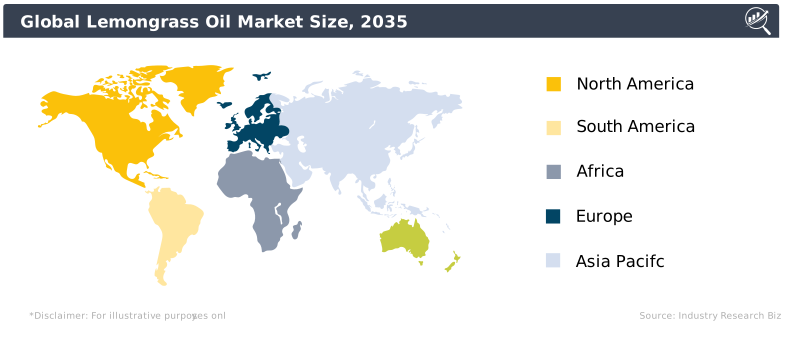
Lemongrass Oil Market Regional Outlook
Get Comprehensive Insights into the Market’s Size and Growth Trends
Download FREE Sample
Get Comprehensive Insights into the Market’s Size and Growth Trends
Download FREE Sample North America
North America remains one of the leading consumption regions for lemongrass oil due to strong demand from the personal care, wellness, and food processing industries. The region accounts for 44.18% of Indian export volumes, highlighting its importance as a major destination for international suppliers. Expanding consumer preference for natural ingredients has encouraged manufacturers to increase the use of lemongrass oil in cosmetics, aromatherapy products, herbal beverages, and specialty formulations. A well-established distribution network further supports stable product availability across the region.
The United States and Canada continue to drive regional demand through increasing adoption of botanical ingredients in premium consumer products. Growth in wellness-focused lifestyles, clean-label food products, and herbal personal care formulations has strengthened industrial consumption across multiple sectors. Importers continue to secure long-term supply agreements with major producing countries to ensure consistent raw material availability. These factors reinforce North America's position as a significant consumption hub within the Lemongrass Oil Market.
Europe
Europe represents the largest consumption market for lemongrass oil, supported by extensive use across cosmetics, aromatherapy, wellness products, and natural personal care applications. The region contributes 41.58% of global demand as manufacturers continue incorporating botanical ingredients into premium consumer products. Strong regulatory support for natural formulations and increasing consumer preference for sustainable ingredients continue to encourage widespread market adoption. High product quality standards also contribute to stable commercial demand throughout the region.
Countries including Germany, France, and the United Kingdom remain key consumers due to their well-developed cosmetic and wellness industries. Manufacturers continue investing in innovative herbal formulations while expanding the use of essential oils across skincare, fragrances, and therapeutic products. Rising awareness regarding environmentally responsible products has further accelerated demand for naturally derived ingredients. These developments continue strengthening Europe's leadership in the global Lemongrass Oil Market.
Asia-Pacific
Asia-Pacific serves as the primary production center for the global lemongrass oil industry, supported by favorable agricultural conditions and established cultivation practices. The region contributes over 70% of global extraction output, making it the backbone of worldwide supply. Countries such as India, Indonesia, and Sri Lanka continue expanding cultivation while improving extraction technologies to meet rising international demand. Strong export capabilities and abundant raw material availability support consistent production across the region.
Increasing investments in processing facilities and quality certification programs are strengthening Asia-Pacific's competitiveness within international markets. Domestic consumption is also expanding due to rising demand from food processing, pharmaceuticals, cosmetics, and wellness industries. Export-oriented production remains a major driver for regional growth as manufacturers continue supplying high-quality essential oils to global buyers. These advantages reinforce Asia-Pacific's leadership in the Lemongrass Oil Market.
Middle East & Africa
The Middle East & Africa continues to emerge as a developing market for lemongrass oil, supported by expanding demand from wellness, cosmetics, and food-related industries. The region currently accounts for 5% of overall market participation, reflecting gradual growth in commercial adoption. Increasing awareness of herbal ingredients and natural personal care products is encouraging wider utilization across multiple end-use sectors. Expanding retail availability and improving distribution channels are also supporting market development.
Countries across the Gulf region and Africa are gradually increasing imports to satisfy growing demand for premium botanical ingredients used in personal care and wellness products. Manufacturers are introducing a broader range of herbal formulations while strengthening partnerships with international suppliers to ensure reliable product availability. Rising consumer interest in natural lifestyles continues creating new business opportunities throughout the region. These trends indicate steady long-term development for the Lemongrass Oil Market across the Middle East & Africa.
Which region dominates the Lemongrass Oil Market?
Asia-Pacific dominates the Lemongrass Oil Market in production due to favorable climatic conditions, established cultivation practices, and strong export capabilities. The region contributes over 70% of global production, with major producing countries supporting international supply chains through large-scale cultivation and advanced processing facilities. Europe leads consumption with 41.58% of global demand, driven by strong adoption in cosmetics, aromatherapy, and wellness applications. Increasing preference for natural ingredients and sustainable formulations continues to support regional demand growth. Strong distribution networks and rising investments in essential oil processing further strengthen the global position of these regions.
List of Top Lemongrass Oil Companies
- Kis Oils
- Rocky Mountain Oils
- Prime Natural Essential Oils
- Fabulous Frannie Essential Oils
- Plant Therapy Essential Oils
- Native American Essential Oils
- Aura Cacia Essential Oils
- Healing Solutions Essential Oils
- ArtNaturals Essential Oils
- Mountain Rose Herbs Essential Oils
- Plant Guru Essential Oils
Top Two Companies With Highest Share
- Kis Oils – Holds the highest market share in the Lemongrass Oil Market, supported by its extensive portfolio of essential oils, strong international distribution network, and broad presence across personal care, aromatherapy, and wellness applications.
- Plant Therapy Essential Oils – Ranks second in market share, driven by its wide range of premium-quality essential oils, established retail and e-commerce channels, and strong customer adoption in aromatherapy, household, and personal care products.
Investment Analysis and Opportunities
Investment activity in the Lemongrass Oil Market is increasingly focused on expanding cultivation, improving extraction efficiency, and strengthening processing infrastructure to meet rising global demand. Europe accounts for 41.58% of global consumption, creating attractive opportunities for producers and exporters supplying cosmetics, food processing, and wellness industries. Investments in modern distillation facilities, sustainable farming practices, and advanced quality control systems are helping manufacturers improve production efficiency while maintaining consistent product quality. Growing demand for naturally derived ingredients continues to encourage capacity expansion across key producing countries.
Manufacturers are also investing in traceability systems, organic certification, and premium packaging solutions to satisfy evolving B2B procurement standards. Expanding cultivation in emerging producing regions is reducing supply concentration while improving long-term supply security for international buyers. Strategic partnerships between growers, processors, and exporters are strengthening global distribution networks and supporting stable product availability. These investment initiatives continue creating long-term growth opportunities throughout the Lemongrass Oil Market.
New Product Development
Product innovation within the Lemongrass Oil Market is centered on premium therapeutic oils, organic food-grade formulations, and advanced fragrance blends designed for personal care, wellness, and food applications. High-quality formulations typically contain 65% citral, supporting improved aroma, consistency, and functionality across a broad range of commercial products. Manufacturers continue introducing specialized formulations that meet stringent quality standards while addressing increasing consumer demand for natural ingredients. Continuous improvements in extraction technologies are also enhancing product purity and manufacturing efficiency.
Companies are expanding their product portfolios with customized essential oil blends for aromatherapy, herbal cosmetics, functional foods, and pharmaceutical applications. New formulation techniques improve product stability, extend shelf life, and ensure consistent performance across large-scale manufacturing processes. Innovation also focuses on sustainable production methods and clean-label ingredients that align with changing consumer preferences. These developments continue strengthening product differentiation and competitive positioning within the Lemongrass Oil Market.
Five Recent Developments
- 2023: Europe maintained its leadership in global lemongrass oil consumption, accounting for 41.58% of overall demand across cosmetics, aromatherapy, and wellness applications.
- 2024: Food-grade lemongrass oil strengthened its market position with rising adoption across beverage, flavoring, and processed food manufacturing industries, representing 47% of grade demand.
- 2024: India continued expanding lemongrass oil production through increased cultivation, improved extraction capacity, and stronger export-oriented manufacturing operations.
- 2025: India reinforced its position as the leading global exporter by expanding international shipment volumes and strengthening worldwide supply chain networks.
- 2025: North America witnessed continued growth in lemongrass oil imports, driven by increasing demand from personal care, wellness, and food processing industries.
Report Coverage of Lemongrass Oil Market
The Lemongrass Oil Market Report provides a comprehensive assessment of global production, consumption patterns, application trends, product segmentation, regional performance, competitive landscape, investment activities, and product innovation. Therapeutic-grade products account for 59.2% of grade demand, highlighting their strong presence across aromatherapy, pharmaceutical, and premium personal care applications. The report evaluates production capabilities, international trade patterns, cultivation expansion, and supply chain developments influencing market performance. It also examines emerging opportunities across food processing, cosmetics, wellness, and pharmaceutical industries.
In addition, the report offers detailed analysis of regional demand, manufacturing capabilities, investment trends, technological advancements, and strategic developments among leading industry participants. It covers evolving product formulations, quality standards, sustainable sourcing practices, and advancements in extraction technologies supporting commercial expansion. The study also evaluates competitive positioning, distribution networks, and business opportunities shaping future market development. This comprehensive coverage provides valuable insights for manufacturers, suppliers, investors, distributors, and other stakeholders operating within the global Lemongrass Oil Market.
Lemongrass Oil Market Report Coverage
| REPORT COVERAGE | DETAILS | |
|---|---|---|
|
Market Size Value In |
USD 61285.03 Million in 2026 |
|
|
Market Size Value By |
USD 143879.47 Million by 2035 |
|
|
Growth Rate |
CAGR of 9.95% from 2026-2035 |
|
|
Forecast Period |
2026 - 2035 |
|
|
Base Year |
2025 |
|
|
Historical Data Available |
Yes |
|
|
Regional Scope |
Global |
|
|
Segments Covered |
By Type :
By Application :
|
|
|
To Understand the Detailed Market Report Scope & Segmentation
Download FREE Sample
|
||
Frequently Asked Questions
The global Lemongrass Oil Market is expected to reach USD 143879.47 Million by 2035.
The Lemongrass Oil Market is expected to exhibit a CAGR of 9.95% by 2035.
Kis Oils,Rocky Mountain Oils,Prime Natural Essential Oils,Fabulous Frannie Essential Oils,Plant Therapy Essential Oils,Native American Essential Oils,Aura Cacia Essential Oils,Healing Solutions Essential Oils,ArtNaturals Essential Oils,Mountain Rose Herbs Essential Oils,Plant Guru Essential Oils
In 2025, the Lemongrass Oil Market value stood at USD 55739 Million.

Related Reports

Our Clients






























.svg)
