

Hand Care Market Size, Share, Growth, and Industry Analysis, By Type (Cleansers, Moisturizers and Others), By Application (Adult, Children and Baby), Regional Insights and Forecast to 2035
 Buy Now


Hand Care Market Overview
The global Hand Care Market is projected to expand steadily from USD 7421.92 Million in 2026 to USD 9921.55 Million by 2035, representing a CAGR of 3.28% during 2026-2035.
The Hand Care Market continues to develop as consumers give greater attention to routine hygiene, skin-barrier protection, dryness prevention, dermatologically positioned formulations, and convenient personal-care formats. Approximately 34% of category purchasing momentum is being influenced by products that combine cleansing or moisturization with added skin-conditioning benefits. Frequent hand washing, exposure to sanitizing products, changing climatic conditions, occupational skin stress, and increasing awareness of ingredient quality are encouraging consumers to use dedicated hand creams, lotions, washes, and treatment-oriented products. Manufacturers are consequently expanding lightweight moisturizers, non-greasy formulations, fragrance-sensitive options, botanical compositions, barrier-supporting products, and multifunctional cleansers.
The United States remains an important national market because hand hygiene routines, established skin-care purchasing habits, high retail availability, and strong adoption of specialized moisturizers support recurring demand. The country is estimated to contribute approximately 21% of global Hand Care Market demand across cleansers, moisturizers, and other supplied product categories. Drugstores, supermarkets, mass retailers, beauty chains, pharmacies, and online platforms provide broad product accessibility, while consumers increasingly distinguish between basic hand lotions and formulations designed for intensive repair, sensitive skin, occupational dryness, or frequent washing. Product innovation is also being influenced by dermatologist-associated positioning, portable packaging, fragrance diversity, fast absorption, and skin-barrier support. Adult consumers remain the main purchasing group, although children and baby formulations create additional opportunities for manufacturers emphasizing mild cleansing systems and carefully selected ingredients.
Get Comprehensive Insights into the Market’s Size and Growth Trends
 Download FREE Sample
 Key Findings
- Market Driver: Increasing attention to hand hygiene and skin-barrier maintenance is strengthening recurring product usage, with approximately 34% of purchasing momentum linked to consumers seeking cleansing products or moisturizers that provide additional skin-conditioning benefits.
- Major Market Restraint: Price sensitivity and extensive availability of general-purpose body-care alternatives continue limiting specialized hand-care purchases, with approximately 22% of value-conscious consumers prioritizing multifunctional personal-care products rather than maintaining separate hand-treatment routines.
- Emerging Trends: Barrier-supporting, fast-absorbing, sensitive-skin, and ingredient-conscious formulations are reshaping innovation priorities, with approximately 29% of new product positioning increasingly emphasizing moisturization performance, dermatological benefits, or gentler formulations suitable for frequent daily application.
- Regional Leadership: North America is expected to maintain regional leadership with approximately 32% market share, supported by established hand-care routines, developed retail channels, premium skin-care adoption, high hygiene awareness, and demand for specialized dryness-management formulations.
- Competitive Landscape: Major personal-care companies are strengthening formulation innovation, packaging differentiation, digital marketing, and broader skin-health positioning, with Unilever estimated to represent approximately 16% of demand within the supplied competitive landscape.
- Market Segmentation: Moisturizers are expected to remain the leading supplied Product Type with approximately 48% market share, while Adult applications dominate demand across the three supplied consumer groups because of frequent cleansing and dryness-management requirements.
- Recent Development: Hand-care innovation is increasingly incorporating concentrated moisturization, reduced-plastic packaging, skin-friendly ingredients, and improved dispensing formats, with approximately 26% of recent product-development activity emphasizing sustainability or enhanced skin-barrier functionality.
Latest Trends
Skin-barrier protection is becoming one of the strongest formulation themes in the Hand Care Market as consumers increasingly connect repeated cleansing with dryness, irritation, roughness, and loss of skin comfort. Approximately 29% of current product innovation emphasis is moving toward formulations positioned around intensive moisturization, barrier reinforcement, fast absorption, sensitive-skin compatibility, or longer-lasting hydration. Manufacturers are increasingly using ingredients such as glycerin, ceramides, plant-derived oils, humectants, emollients, and skin-conditioning compounds to differentiate hand creams and lotions from basic cosmetic moisturizers. Non-greasy textures are particularly important because consumers often apply products during work, travel, household activities, or immediately after washing. Fragrance-free and dermatologically oriented options are gaining visibility alongside conventional scented formulations, creating a broader portfolio structure capable of addressing both functional treatment requirements and everyday sensory preferences.
Sustainability, portability, and digital retail visibility are also influencing product development and merchandising strategies. Approximately 24% of emerging hand-care launches and packaging initiatives are increasingly associated with recyclable materials, reduced packaging weight, refill concepts, concentrated formats, or more efficient dispensing systems. Tube packaging remains important for hand creams because it offers portability and controlled application, while pump formats support frequent household and workplace usage. Online retail is expanding product discovery by allowing consumers to compare ingredient lists, reviews, skin-type claims, pack sizes, and specialized benefits before purchasing. Social-media-led skin-care education is additionally encouraging younger adult consumers to incorporate hand treatment into broader beauty routines. These developments are moving hand care beyond a purely seasonal category and supporting more consistent year-round consumption across developed and increasingly urbanized emerging markets.
Market Dynamics
Driver
"Frequent cleansing strengthens demand for daily skin protection."
Frequent hand washing remains a central demand driver because repeated exposure to water, cleansing agents, sanitizing products, occupational environments, and changing weather conditions can increase dryness and encourage consumers to use dedicated moisturizing products. Approximately 34% of category growth momentum is linked to consumers seeking products that combine hygiene routines with improved skin comfort and barrier protection. This behavior supports both Cleansers and Moisturizers, particularly when formulations emphasize gentle ingredients, hydrating performance, or suitability for repeated application. Healthcare workers, hospitality employees, industrial personnel, office users, parents, and consumers living in colder or low-humidity climates represent important user groups. Manufacturers are responding with richer creams, lightweight lotions, overnight treatments, quick-absorbing formulas, and hand washes designed to reduce the drying effects associated with frequent cleansing.
Restraint
"Substitution and price sensitivity restrict specialized product spending."
The Hand Care Market faces competition from general-purpose body lotions, multipurpose moisturizers, soaps, and cleansing products that consumers may use on their hands without purchasing a specialized hand-care formulation. Approximately 22% of value-conscious purchasing decisions are affected by consumers choosing multifunctional personal-care products when household budgets are under pressure. This substitution risk is particularly relevant in price-sensitive markets where hand creams may be viewed as discretionary compared with essential cleansing products. Frequent promotional activity can also make brand loyalty more difficult to maintain because shoppers may switch between comparable products according to discounts, pack sizes, retailer availability, or bundled offers. Manufacturers therefore need clear functional differentiation through texture, ingredients, skin benefits, convenience, or specialized claims to justify dedicated hand-care purchases.
Opportunity
"Specialized skin needs create room for portfolio expansion."
Specialized hand-care requirements create significant opportunities for companies to move beyond conventional moisturizing creams and develop products tailored to distinct usage occasions. Approximately 31% of emerging category opportunities are associated with sensitive-skin care, intensive dryness repair, occupational protection, fragrance-free formulations, age-related skin concerns, or products designed for repeated daily washing. Consumers increasingly expect clearly communicated functional benefits, encouraging companies to differentiate through ingredients, texture, absorption speed, clinical positioning, and application convenience. Products for overnight use, concentrated repair, cuticle conditioning, travel, workplace environments, and cold-weather protection can broaden the category while encouraging consumers to own more than one hand-care product. This specialization can also support premiumization when performance differences are easy for consumers to understand.
Challenge
"Crowded product shelves make meaningful differentiation difficult."
Maintaining differentiation is challenging because many hand-care products compete around similar claims involving hydration, softness, repair, gentle cleansing, and pleasant fragrance. Approximately 25% of competitive pressure is linked to the growing number of products using overlapping moisturizing and skin-conditioning messages across mass, premium, pharmacy, and digitally native brands. Consumers may find it difficult to distinguish meaningful formulation differences, increasing reliance on price, familiarity, packaging, reviews, or retailer promotion. Established manufacturers must therefore communicate benefits clearly while avoiding excessive complexity. Demonstrable texture improvements, rapid absorption, sensitive-skin suitability, distinctive ingredients, packaging functionality, and credible skin-health positioning can improve differentiation, but these improvements require continuous research, consumer testing, and marketing investment.
Hand Care Market Segmentation
Get Comprehensive Insights on the Market Segmentation in this Report
Download FREE Sample
Get Comprehensive Insights on the Market Segmentation in this Report
Download FREE Sample By Types
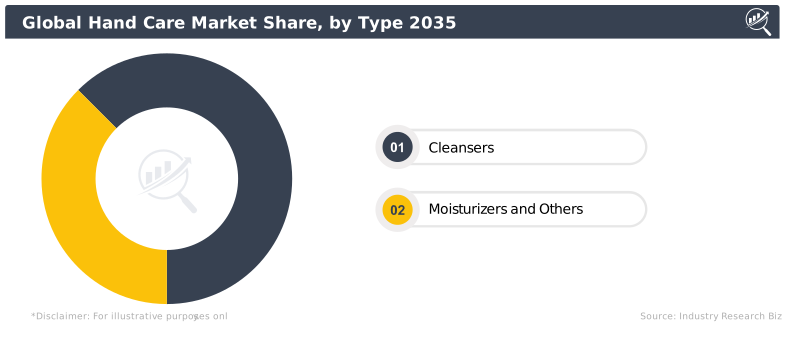
Cleansers: Cleansers account for approximately 37% of the Hand Care Market, supported by the persistent importance of hand hygiene across households, workplaces, healthcare facilities, schools, hospitality environments, and public spaces. Demand covers liquid hand washes, foaming cleansers, mild cleansing formulas, and specialized products developed for frequent use. Consumers are increasingly considering skin comfort alongside cleansing performance, encouraging manufacturers to reduce harshness and incorporate moisturization-oriented ingredients. Gentle surfactant systems, botanical extracts, fragrance variations, sensitive-skin positioning, and convenient pump packaging are helping suppliers differentiate their offerings.
Moisturizers: Moisturizers lead the supplied Product Types with approximately 48% market share as consumers increasingly seek solutions for dryness, roughness, cracking, skin-barrier disruption, and discomfort associated with frequent cleansing or environmental exposure. Hand creams, lotions, balms, intensive repair products, and fast-absorbing moisturizers address a broad range of usage occasions. Product development increasingly emphasizes non-greasy textures, longer-lasting hydration, sensitive-skin compatibility, and ingredients associated with barrier support. Demand is particularly strong among adults who frequently wash their hands, work in dry indoor environments, undertake manual activities, or experience seasonal skin dryness.
Others: Other hand-care products represent approximately 15% of market share and include specialized treatments, masks, cuticle-oriented products, protective formulations, exfoliating products, and multipurpose solutions positioned beyond conventional cleansers and moisturizers. This segment benefits from consumers adopting more detailed skin-care routines and seeking products for targeted concerns such as extreme dryness, rough texture, nail-area conditioning, or occupational exposure. Premium beauty brands and specialized skin-care companies can use this category to introduce differentiated formulations that offer higher perceived functionality. Although smaller than the principal categories, Others creates innovation opportunities because concentrated products, overnight treatments, portable protective formats, and specialized application concepts can attract consumers seeking advanced hand-maintenance routines.
By Applications
Adult: Adult applications dominate the Hand Care Market with approximately 67% market share because working-age and older consumers experience frequent exposure to cleansing agents, environmental stress, occupational conditions, household activities, and seasonal dryness. Adults account for substantial usage of both Cleansers and Moisturizers across homes, offices, healthcare facilities, manufacturing environments, hospitality locations, and travel settings. Demand spans basic hygiene products, daily lotions, intensive repair creams, fragrance-led products, sensitive-skin formulas, and premium hand treatments. Growing awareness of skin-barrier health is also encouraging adults to apply moisturizers preventively rather than waiting for visible cracking or irritation, supporting higher usage frequency and broader product ownership.
Children: Children represent approximately 21% of Hand Care Market demand, supported by routine hand washing at home, schools, childcare environments, recreational facilities, and public locations. Parents increasingly prefer mild formulations designed to cleanse effectively while minimizing dryness, creating opportunities for gentle cleansers and lightweight moisturizers. Packaging, fragrance, dispensing convenience, and skin compatibility influence purchasing decisions because products intended for children must combine functional hygiene with easy everyday use. Manufacturers can strengthen this segment through dermatologically positioned formulas, simplified ingredient communication, family-oriented pack sizes, and products designed for frequent application during school periods, colder seasons, and periods of elevated hygiene awareness.
Baby: Baby applications account for approximately 12% of the market as parents prioritize mild ingredients, gentle cleansing, fragrance-sensitive options, and formulations designed for delicate skin. Demand tends to favor products with carefully selected surfactants, simple ingredient positioning, and skin-conditioning properties rather than highly fragranced or intensive cosmetic characteristics. Baby hand-care requirements are often integrated within broader infant personal-care routines, giving established family and baby-care brands an opportunity to cross-sell compatible products. Manufacturers targeting this application increasingly emphasize dermatological suitability, packaging safety, controlled dispensing, and uncomplicated product communication to build trust among parents purchasing products for highly sensitive skin.
Hand Care Market Regional Outlook
Get Comprehensive Insights into the Market’s Size and Growth Trends
Download FREE Sample North America
North America leads the Hand Care Market with approximately 32% market share, supported by well-established personal-care routines, high awareness of hand hygiene, developed retail infrastructure, premium skin-care consumption, and strong availability of specialized products. The United States contributes most regional demand, while Canada provides additional consumption through mass retail, pharmacy, beauty, and e-commerce channels. Consumers increasingly distinguish between everyday lotions and targeted formulations designed for dry, sensitive, aging, or frequently washed skin.
Product innovation across North America is increasingly focused on skin-barrier support, fast absorption, dermatologist-associated positioning, sustainability, and convenience, with approximately 28% of new regional product emphasis linked to enhanced functionality or differentiated packaging. Cold-weather conditions across important parts of the United States and Canada support seasonal moisturizer demand, while year-round hand hygiene maintains cleanser consumption.
Europe
Europe represents approximately 27% of global Hand Care Market demand, supported by mature skin-care consumption, established pharmacy and beauty channels, strong sustainability awareness, and widespread use of moisturizers in colder climates. Germany, the United Kingdom, France, Italy, Spain, and Nordic countries remain important national markets. European consumers increasingly evaluate ingredient quality, dermatological positioning, packaging design, fragrance, and environmental characteristics when selecting hand-care products.
Sustainability plays a comparatively important role in European product development, with approximately 30% of packaging-oriented initiatives increasingly emphasizing recyclable materials, reduced plastic usage, refill concepts, or more resource-efficient formats. Manufacturers are responding by redesigning tubes, pumps, bottles, and secondary packaging while maintaining product stability and dispensing performance. Strong natural and ingredient-conscious personal-care trends are also encouraging suppliers to introduce formulations featuring plant-derived oils, recognizable moisturizing ingredients, and simplified product claims that appeal to consumers seeking both functional effectiveness and responsible product positioning.
Asia-Pacific
Asia-Pacific accounts for approximately 25% of the Hand Care Market and represents a major expansion area because of large consumer populations, rising disposable income, urbanization, expanding organized retail, and increasing adoption of structured skin-care routines. China, Japan, South Korea, India, and Southeast Asian markets provide diversified opportunities ranging from mass-market cleansers to premium moisturizers. Beauty-oriented consumers in developed Asian markets increasingly incorporate hand products into broader personal-care routines, while developing markets continue expanding through hygiene awareness, modern retail penetration, and wider availability of branded products.
Digital commerce is particularly influential across the region, with approximately 35% of emerging hand-care product discovery increasingly connected with online marketplaces, social-media promotion, digital beauty content, and mobile-led purchasing behavior. Manufacturers can use digital channels to introduce specialized products without depending entirely on conventional retail distribution. Lightweight textures, convenient packaging, fragrance differentiation, brightening-oriented positioning, and fast absorption can be particularly relevant in warmer or humid environments, while richer creams retain demand in colder East Asian markets and among consumers seeking intensive repair.
Middle East and Africa
Middle East and Africa represent approximately 9% of global Hand Care Market demand, with consumption patterns varying considerably between higher-income Gulf countries and developing African markets. Gulf markets support premium personal care, fragrance-oriented products, modern retail, and specialized moisturizers, while many African markets remain more concentrated around essential cleansing and affordable skin-conditioning products. Dry climatic conditions across parts of the region can reinforce demand for moisturizers, especially among consumers exposed to air conditioning, heat, low humidity, frequent hand washing, or occupational environmental stress.
Modern retail and e-commerce expansion are broadening product accessibility, with approximately 20% of developing regional demand increasingly associated with consumers gaining improved access to branded personal-care portfolios. Smaller pack sizes and competitively priced products remain important for supporting penetration in price-sensitive economies. International manufacturers compete alongside regional brands, creating opportunities for formulations adapted to local climate conditions, fragrance preferences, family usage patterns, and affordability requirements while maintaining recognizable hygiene and skin-care benefits.
Rest of the World
Rest of the World accounts for approximately 7% of the Hand Care Market, including smaller Latin American, island, and developing consumer markets where branded personal-care consumption continues to expand. Urbanization, supermarket development, pharmacy expansion, beauty retail growth, and increasing e-commerce accessibility are strengthening consumer exposure to dedicated hand-care products. Cleansers remain important because of routine hygiene requirements, while moisturizer adoption grows as consumers become more familiar with specialized products for dryness, softness, fragrance, and skin conditioning.
Approximately 18% of growth-oriented activity across these markets is linked to broader distribution, affordable packaging, and increased availability of international and regional brands. Manufacturers can improve penetration through smaller sizes, multipurpose positioning, localized fragrance preferences, accessible pricing, and digital retail partnerships. As consumers gradually diversify beyond basic personal-care products, dedicated hand creams, gentle cleansers, and specialized skin-treatment formats are expected to gain stronger visibility within pharmacies, supermarkets, beauty outlets, and online channels.
List of Top Hand Care Market Companies
- Unilever
- Johnson and Johnson
- Procter and Gamble
- Coty
- Beiersdorf
- Whealthfields Lohmann
- Jahwa
- KAO
- 3M
- Reckitt Benckiser
- Lion Corporation
- Henkel
Top Two Companies with Highest Market Share
- Unilever: Unilever is estimated to account for approximately 16% of demand within the supplied competitive landscape, supported by its extensive personal-care portfolio, broad international distribution, strong mass-market presence, and ability to combine cleansing, moisturization, hygiene, and skin-care positioning. The company benefits from established relationships with supermarkets, pharmacies, beauty retailers, e-commerce platforms, and institutional channels.
- Procter and Gamble: Procter and Gamble is estimated to represent approximately 12% of the supplied competitive landscape, supported by strong consumer-brand recognition, large-scale retail distribution, product-development resources, and extensive experience across cleansing and personal-care categories.
Investment Analysis and Opportunities
Investment opportunities in the Hand Care Market are increasingly concentrated in specialized moisturization, sensitive-skin positioning, premium textures, sustainable packaging, digital commerce, and differentiated hygiene products. Approximately 30% of new strategic investment attention is being directed toward products that provide benefits beyond basic cleansing or hydration, including skin-barrier support, intensive repair, fast absorption, fragrance-free positioning, and dermatological compatibility. Manufacturers can strengthen margins by creating clear functional distinctions between standard lotions and higher-value treatments while retaining accessible mass-market formats.
Emerging-market distribution offers another important area for investment as organized retail, pharmacies, supermarkets, beauty stores, and e-commerce platforms expand access to branded personal-care products. Approximately 27% of future market-development opportunity is associated with improving product availability in urbanizing economies where consumers are gradually adopting more structured hygiene and skin-care routines. Companies can support penetration through affordable pack sizes, locally relevant textures, family-oriented products, refill formats, and digital marketing strategies.
New Product Development
New product development is moving toward multifunctional formulations that combine moisturization, barrier support, rapid absorption, mild ingredients, and improved sensory performance. Approximately 29% of current innovation priorities are centered on products positioned for sensitive, dry, frequently washed, or environmentally stressed hands. Manufacturers are exploring humectants, emollients, ceramides, botanical oils, skin-conditioning agents, and carefully selected cleansing systems to improve performance while minimizing greasiness or discomfort. Lightweight creams and lotions are being developed for daytime and workplace use, while richer balms and concentrated treatments target overnight repair or severe dryness.
Packaging development is becoming equally important as manufacturers attempt to improve convenience while responding to sustainability expectations. Approximately 26% of new product-development activity is associated with recyclable packaging, lower-plastic formats, refill options, lightweight tubes, improved pumps, or dispensing systems designed to reduce product waste. Portable tubes remain attractive for handbags, workplaces, and travel, while larger pumps and refill packs support high-frequency household usage. Packaging also contributes to brand differentiation through shape, texture, labeling, and dispensing experience. Suppliers are increasingly evaluating whether packaging changes can reduce material usage without compromising product protection, transport durability, shelf stability, or ease of use.
Five Recent Developments
- January 2026 – Barrier Care Formulations Gain Wider Adoption: Hand-care manufacturers increased emphasis on ceramide, humectant, and emollient-based products designed for frequent daily use, with approximately 28% of new formulation activity focusing on improved skin-barrier support and dryness prevention.
- March 2026 – Refill Packaging Expands Across Personal Care: Brands broadened refillable and reduced-material packaging concepts for cleansers and moisturizers, with approximately 24% of packaging innovation increasingly targeting lower plastic consumption, improved material efficiency, and more sustainable household replenishment formats.
- May 2026 – Sensitive Skin Products Receive Greater Focus: Manufacturers expanded fragrance-free and mild hand-care options intended for users with sensitive or frequently washed skin, with approximately 27% of product positioning emphasizing gentler formulations and improved compatibility with repeated daily application.
- July 2026 – Digital Channels Strengthen Product Discovery: Hand-care companies increased online launches, influencer education, ingredient communication, and targeted digital merchandising as approximately 32% of newer consumer discovery activity became more closely connected with e-commerce and social-media-led skin-care research.
- September 2026 – Portable Moisturizers Drive Convenience Innovation: Brands introduced compact tubes, improved closures, and travel-oriented formats aimed at workplace and on-the-go usage, with approximately 21% of convenience-focused innovation addressing easier application and greater portability during everyday routines.
Report Coverage
The Hand Care Market report evaluates market conditions across the supplied Product Types of Cleansers, Moisturizers, and Others, while examining demand across Adult, Children, and Baby applications. Moisturizers represent approximately 48% of supplied Product Type demand, reflecting continued consumer focus on dryness management, skin-barrier protection, intensive repair, and routine hydration. The coverage evaluates purchasing patterns, formulation development, ingredient trends, packaging innovation, sustainability, distribution strategies, premiumization, affordability, and consumer behavior.
The regional assessment covers North America, Europe, Asia-Pacific, Middle East and Africa, and Rest of the World, with North America accounting for approximately 32% of market share under the report's regional allocation. Competitive coverage includes Unilever, Johnson and Johnson, Procter and Gamble, Coty, Beiersdorf, Whealthfields Lohmann, Jahwa, KAO, 3M, Reckitt Benckiser, Lion Corporation, and Henkel. The analysis also examines investment opportunities, new product development, evolving formulation strategies, e-commerce expansion, sustainable packaging, consumer segmentation, and competitive positioning.
Hand Care Market Report Coverage
| REPORT COVERAGE | DETAILS | |
|---|---|---|
|
Market Size Value In |
USD 7421.92 Million in 2026 |
|
|
Market Size Value By |
USD 9921.55 Million by 2035 |
|
|
Growth Rate |
CAGR of 3.28% from 2026-2035 |
|
|
Forecast Period |
2026 - 2035 |
|
|
Base Year |
2025 |
|
|
Historical Data Available |
Yes |
|
|
Regional Scope |
Global |
|
|
Segments Covered |
By Type :
By Application :
|
|
|
To Understand the Detailed Market Report Scope & Segmentation
Download FREE Sample
|
||
Frequently Asked Questions
The global Hand Care Market is expected to reach USD 9921.55 Million by 2035.
The Hand Care Market is expected to exhibit a CAGR of 3.28% by 2035.
Unilever, Johnson and Johnson, Procter and Gamble, Coty, Beiersdorf, Whealthfields Lohmann, Jahwa, KAO, 3M, Reckitt Benckiser, Lion Corporation, Henkel
In 2026, the Hand Care Market value will reach at USD 7421.92 Million.

Related Reports

Our Clients






























.svg)
