

Art Insurance Market Size, Share, Growth, and Industry Analysis, By Type (Property Insurance, Title Insurance), By Application (Private, Commercial), Regional Insights and Forecast to 2035
 Buy Now


Art Insurance Market Overview
The global Art Insurance Market is projected to experience sustained growth from USD 4380.91 Million in 2026 to USD 6939.63 Million by 2035, exhibiting a CAGR of 5.24% during the forecast period 2026-2035.
The Art Insurance Market is expanding as collectors, galleries, museums, dealers, auction businesses, and corporate collection owners seek specialized protection against accidental damage, theft, fire, natural hazards, transit losses, and ownership disputes. Approximately 58% of insured art clients are increasingly prioritizing specialist policies that combine physical asset protection with professional valuation, transportation guidance, collection documentation, and preventive risk-management support. Demand is also being influenced by the diversification of collectible assets, more frequent international exhibitions, greater mobility of private collections, and increasing awareness that conventional property policies may provide insufficient protection for unique or difficult-to-replace objects.
The United States remains one of the most significant national markets for art insurance because of its large population of private collectors, extensive museum network, active gallery sector, major auction ecosystem, and concentration of high-value household collections. Nearly 42% of specialist art insurance demand in the country is associated with private collectors seeking individually structured protection for paintings, sculptures, antiques, photography, contemporary artworks, and other collectibles. Insurers operating in the U.S. are placing greater emphasis on agreed-value coverage, professional appraisals, climate-related loss prevention, secure transportation practices, storage assessments, and collection-management services.
Get Comprehensive Insights into the Market’s Size and Growth Trends
 Download FREE Sample
 Key Findings
- Market Driver: Rising ownership of high-value private collections is strengthening specialized insurance demand, with approximately 62% of collectors placing greater importance on comprehensive protection covering damage, theft, transportation, storage, and temporary exhibition risks.
- Major Market Restraint: Complex valuation and documentation requirements continue to restrict policy adoption, as nearly 36% of prospective customers encounter difficulties maintaining current appraisals, provenance records, ownership documentation, and appropriate insured values for changing collections.
- Emerging Trends: Digital collection management, artificial intelligence-assisted valuation, and remote risk assessment are reshaping underwriting practices, with approximately 44% of specialist insurance workflows increasingly incorporating technology-supported documentation, valuation monitoring, or collection-risk analysis.
- Regional Leadership: North America is expected to maintain market leadership, accounting for approximately 38% of global demand because of its established collector base, major auction activity, extensive museum infrastructure, and strong availability of specialized insurance services.
- Competitive Landscape: Insurers are expanding advisory partnerships and specialist risk-management capabilities, with nearly 31% of competitive initiatives focusing on appraisal support, collection-management services, preventive loss assessment, tailored underwriting, and technology-enabled client engagement.
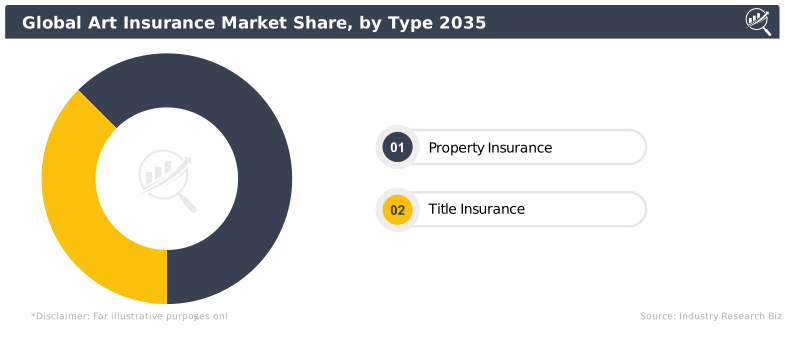
- Market Segmentation: Property Insurance is expected to remain the largest product type with approximately 74% market share, while Private continues as the dominant application because individual collectors require customized protection for frequently changing high-value collections.
- Recent Development: Specialized insurers are strengthening technology-enabled collection services, with around 29% of recent service enhancements emphasizing digital inventories, updated valuations, risk alerts, improved documentation, and more proactive protection of valuable art assets.
Latest Trends
The Art Insurance Market is experiencing a transition from traditional claims-focused protection toward continuous collection management and preventive risk services. Approximately 46% of specialist policyholders increasingly value services that support inventory digitization, updated appraisals, condition monitoring, transportation planning, catastrophe preparedness, and security assessment alongside conventional insurance coverage. Collectors are managing more diversified portfolios that can include paintings, sculptures, photography, digital-linked artworks, designer collectibles, rare objects, and culturally significant items, requiring insurers to assess broader combinations of physical, ownership, environmental, and transit risks.
Another major trend is increasing emphasis on climate resilience and accumulation-risk management for collections concentrated in vulnerable locations. Nearly 37% of specialist underwriting reviews now place stronger attention on flood exposure, wildfire conditions, severe storms, humidity control, backup power, building resilience, and emergency evacuation procedures. High-value artworks can be unusually sensitive to heat, moisture, smoke, vibration, and improper handling, making preventive measures increasingly important to underwriting decisions. Commercial galleries and institutions are also seeking more flexible protection for exhibitions, temporary loans, international transit, and storage because artworks frequently move between facilities.
Market Dynamics
Driver
"Expanding private collections are strengthening demand for specialized protection."
Growth in private art ownership is a central driver of the Art Insurance Market as collectors increasingly recognize that conventional household or commercial property coverage may not adequately address the distinctive valuation, transportation, restoration, and ownership risks associated with valuable artworks. Approximately 64% of specialist customers prefer policies structured around individually assessed collections rather than standardized asset protection. This preference is supporting demand for agreed-value arrangements, automatic acquisition provisions, worldwide transit protection, temporary location coverage, restoration cost support, and specialist claims handling. The expansion of collectible categories is further increasing underwriting complexity because collections can now include traditional fine art alongside photography, design objects, rare memorabilia, limited-edition items, and other assets requiring different valuation and conservation approaches.Increasing movement of artworks between residences, galleries, storage locations, exhibitions, and auction venues is also strengthening demand for broader protection.
Restraint
"Valuation uncertainty and incomplete documentation complicate effective underwriting."
A significant restraint affecting the Art Insurance Market is the difficulty of establishing and maintaining accurate insured values for unique objects whose market prices can change considerably over time. Approximately 39% of collection owners delay formal reappraisals because of cost, administrative effort, limited access to specialists, or uncertainty regarding appropriate valuation frequency. Outdated valuations can create underinsurance when artwork values rise, while excessive insured values may increase premium costs without providing proportional benefits. Unique artworks also lack standardized replacement prices, requiring insurers to consider artist reputation, provenance, condition, rarity, sales history, authenticity, restoration history, and broader market activity. These factors can extend underwriting procedures and make specialist policies appear more complicated than conventional property insurance.Incomplete provenance and ownership documentation creates another barrier, particularly for older artworks, inherited collections, privately purchased objects, and assets acquired across multiple jurisdictions.
Opportunity
"Digital insurance access and underinsured younger collectors create substantial expansion potential."
The growing population of digitally engaged collectors presents an important opportunity for Art Insurance Market participants. Approximately 57% of emerging collectors prefer simplified online processes for researching coverage, documenting newly acquired objects, requesting quotations, and maintaining collection records. Insurers can address this demand through digital onboarding, mobile collection-management tools, automated policy updates, electronic appraisal storage, and streamlined acquisition notifications. Embedded insurance models can also connect specialized protection directly with galleries, dealers, auction platforms, art advisors, and other purchase channels. These capabilities are particularly relevant for collectors who frequently add items to portfolios and expect insurance protection to keep pace with acquisitions without lengthy administrative procedures.Commercial expansion also offers significant potential as galleries, museums, auction businesses, art fairs, corporate collections, and specialist storage facilities require more flexible protection for changing inventories.
Challenge
"Evolving art values and complex risk exposures increase underwriting difficulty."
Accurate underwriting remains challenging because artworks are heterogeneous assets whose condition, provenance, market desirability, location, security, and physical characteristics can change their risk profile substantially. Approximately 34% of complex underwriting cases require additional specialist assessment before appropriate terms can be finalized. Paintings, sculptures, installations, antique objects, and fragile works can face different vulnerabilities during transportation, installation, display, storage, or restoration. Insurers must therefore combine valuation expertise with physical risk analysis and detailed ownership documentation. The challenge becomes greater for collections distributed across multiple residences or international locations because insurers must evaluate different environmental hazards, security standards, catastrophe exposures, and transportation practices within a single policy relationship.Claims management represents an additional challenge because damaged artwork may require restoration rather than straightforward replacement.
Art Insurance Market Segmentation
Get Comprehensive Insights on the Market Segmentation in this Report
Download FREE Sample
Get Comprehensive Insights on the Market Segmentation in this Report
Download FREE Sample By Types
Property Insurance: Property Insurance represents the largest product segment of the Art Insurance Market, accounting for approximately 74% of market demand. This coverage is widely used to protect paintings, sculptures, antiques, photography, installations, and other insured artworks against accidental damage, theft, fire, water damage, natural hazards, and transportation-related incidents. Demand is particularly strong among collectors who require protection beyond conventional household policies and among commercial organizations handling art at multiple locations. Property Insurance can be structured around individually scheduled artworks or broader collection arrangements, enabling policyholders to adjust protection according to collection size, asset values, storage practices, and frequency of movement.
Title Insurance: Title Insurance accounts for approximately 26% of Art Insurance Market demand and addresses ownership-related risks that differ fundamentally from physical damage protection. The segment is relevant for collectors purchasing works with complicated provenance, extensive transaction histories, international ownership chains, inheritance issues, or potential competing ownership claims. It can provide protection where questions arise concerning legal title after an artwork has been acquired. Interest in this coverage is increasing as buyers become more attentive to provenance documentation, authenticity, lawful export history, restitution claims, and previous ownership. Higher-value transactions can require extensive due diligence before insurers determine whether an ownership risk is acceptable.
By Applications
Private: Private applications dominate the Art Insurance Market with approximately 61% market share, supported by expanding personal collections and greater awareness of the limitations associated with standard household insurance. Private collectors commonly require coverage for artworks displayed in residences, stored in specialist facilities, transported between properties, loaned to exhibitions, or temporarily placed with restorers and galleries. Demand is particularly strong among individuals whose collections change through regular acquisitions and sales. Specialized insurance can provide more flexible valuation arrangements, collection-specific claims handling, risk-management advice, and protection for newly acquired pieces, making it suitable for collectors managing diverse portfolios of valuable and difficult-to-replace objects.
Commercial: Commercial applications account for approximately 39% of market demand and include galleries, museums, auction businesses, corporate collections, art dealers, exhibition organizers, specialist warehouses, and other organizations responsible for artworks. These clients frequently face changing inventories and temporary custody of objects belonging to multiple owners, creating more complex coverage requirements than those associated with static collections. Policies may need to accommodate exhibitions, loans, consignments, storage, packing, transportation, installation, and temporary international movement. Commercial customers therefore value insurers capable of providing flexible limits, specialist claims expertise, risk assessments, and coverage that can adapt as artworks move between venues or change custodial responsibility.
Regional Outlook
Get Comprehensive Insights into the Market’s Size and Growth Trends
Download FREE Sample North America
North America leads the Art Insurance Market with approximately 38% market share, supported by a large population of established private collectors, internationally recognized museums, major galleries, auction activity, and sophisticated specialist insurance infrastructure. The United States represents the principal demand center, while Canada contributes through institutional collections and expanding private ownership. Insurers across the region increasingly provide agreed-value policies, worldwide transit protection, collection-management services, conservation guidance, catastrophe assessment, and security recommendations. The concentration of valuable artworks in major metropolitan areas also increases demand for policies capable of addressing theft, fire, water damage, severe weather, transportation, and temporary exhibition risks.
Climate resilience is becoming increasingly important across North American underwriting, with nearly 47% of specialist risk assessments placing greater emphasis on wildfire, hurricane, flood, temperature-control, and water-leak exposure. Insurers are encouraging collectors to improve storage standards, emergency procedures, building security, backup power, and environmental monitoring. Growing use of professional storage facilities and frequent relocation of artworks between residences, galleries, museums, and exhibitions are also increasing demand for flexible coverage. Digital inventory systems are helping insurers and policyholders maintain current records and identify changes in collection values or locations more efficiently.
Europe
Europe accounts for approximately 29% of the Art Insurance Market, supported by centuries of collecting activity, extensive cultural institutions, important auction centers, specialist galleries, private estates, and internationally significant art fairs. The United Kingdom, France, Germany, Switzerland, and Italy contribute strongly to regional demand. European policies frequently address cross-border transportation, exhibitions, private collections, institutional loans, storage, and ownership documentation. Historic artworks and inherited collections also create demand for specialist valuation and provenance expertise because many objects have complex ownership histories requiring careful documentation before comprehensive coverage can be finalized.
Approximately 42% of European commercial art insurance requirements involve temporary custody, exhibition, transportation, or loan-related exposures. This encourages insurers to work closely with museums, galleries, logistics specialists, conservators, security professionals, and professional storage operators. Environmental controls remain particularly important for older paintings, works on paper, textiles, and other sensitive objects. European insurers are also strengthening digital documentation and collection-management capabilities, helping customers maintain condition reports, appraisal records, provenance information, and location histories while reducing administrative complexity associated with cross-border movement.
Asia-Pacific
Asia-Pacific represents approximately 22% of market demand and is expanding as wealth creation, private collecting, corporate collections, gallery development, and regional auction activity increase. China, Japan, South Korea, Singapore, Hong Kong, and Australia are important centers for specialist coverage. Increasing participation by younger collectors is widening demand beyond traditional fine art toward contemporary artworks, photography, limited editions, design pieces, and other collectible categories. This diversification is encouraging insurers to provide more adaptable underwriting structures and improved digital tools for documenting frequently changing personal collections.
Nearly 49% of emerging collectors in major Asia-Pacific art centers show stronger preference for digital communication, electronic documentation, and simplified policy administration. Insurers are responding with online inventories, remote consultations, faster acquisition notifications, and digital appraisal storage. Growing regional art fairs and international exhibitions are also expanding transportation and temporary-location exposure. This environment creates opportunities for insurers capable of coordinating with specialist art handlers and storage facilities while maintaining consistent protection as objects move between countries, residences, galleries, exhibitions, and auction venues.
Middle East and Africa
Middle East and Africa holds approximately 6% of the Art Insurance Market, with demand concentrated in major wealth centers, private collections, cultural institutions, museums, galleries, and expanding art-event ecosystems. Gulf markets are contributing to specialized insurance adoption through investment in cultural infrastructure and growing interest in internationally sourced artworks. Collectors increasingly require protection for objects moving between residences, storage locations, exhibitions, and overseas markets, increasing the importance of worldwide transit and temporary-location coverage.
Approximately 35% of specialist regional inquiries increasingly include requirements related to transportation, climate control, or high-value storage. Extreme temperatures, humidity variation, security considerations, and long-distance international transportation can create distinctive risk-management requirements. Insurers are therefore emphasizing professional packing, controlled storage environments, condition documentation, security systems, and approved logistics providers. Expanding institutional collections and private museums are expected to strengthen opportunities for tailored commercial protection and advisory services.
Rest of the World
Rest of the World accounts for approximately 5% of market demand, encompassing developing collection markets across Latin America and other smaller art centers. Growth is supported by expanding private wealth, increased gallery activity, cultural investment, and greater awareness of specialist insurance among collectors. Demand remains comparatively fragmented because access to professional appraisers, conservators, secure storage, and specialized underwriting expertise varies considerably across countries. International insurers and brokers can address these gaps through cross-border policy structures and professional service networks.
Nearly 27% of developing-market collectors seeking specialist coverage identify international transportation and access to reliable valuation expertise as important considerations. As regional art ecosystems become more connected to global auction houses, exhibitions, galleries, and collectors, insurance requirements are becoming increasingly sophisticated. Digital valuation records and remote risk assessments can improve accessibility where local specialist infrastructure remains limited. Partnerships with international logistics providers and appraisal professionals can further support market expansion.
List of Top Art Insurance Market Companies
- AXA
- Zurich Insurance Group
- AIG
- Chubb
- Progressive
- Allianz
- Aon plc
- CPIC
- Ping An
Top Two Companies with Highest Market Share
- AXA: AXA holds an estimated 13% share within the competitive specialist art insurance landscape, supported by international underwriting capabilities, private-client services, risk-engineering expertise, and experience covering high-value collections across multiple locations and transportation situations.
- Chubb: Chubb represents an estimated 11% share, strengthened by its focus on high-net-worth customers, valuable collections, specialized claims management, appraisal support, risk-prevention services, and coverage structures designed for privately owned artworks and collectible assets.
Investment Analysis and Opportunities
Investment opportunities within the Art Insurance Market are increasingly centered on digital underwriting, collection-management platforms, valuation technology, risk analytics, and partnerships across the professional art ecosystem. Approximately 43% of strategic investment activity is focused on improving digital customer interaction, automated documentation, portfolio monitoring, and risk assessment. Insurers can reduce administrative workloads by enabling customers to upload acquisition records, photographs, appraisal documents, and location information through centralized platforms. Technology investment can also help identify underinsurance and improve communication when collection characteristics change.
Commercial partnerships represent another attractive opportunity, with nearly 38% of growth-oriented initiatives involving collaboration with galleries, auction businesses, art advisers, storage providers, logistics specialists, or valuation professionals. Such relationships can introduce insurance protection closer to the point of acquisition while creating integrated services for collectors. Emerging art centers offer additional long-term potential where specialist coverage remains underpenetrated. Providers capable of combining local distribution with international underwriting expertise can address growing demand among newly affluent collectors and expanding cultural institutions.
New Product Development
New product development is moving toward flexible policies that automatically adapt as collections change. Approximately 45% of product innovation initiatives emphasize simplified additions of newly acquired works, broader transit protection, temporary-location coverage, digital inventories, and regular valuation reviews. Modern collectors frequently buy, sell, lend, relocate, and display objects, making static annual schedules increasingly inconvenient. Insurers are therefore developing modular coverage structures that can respond to changing ownership patterns while maintaining clear documentation and agreed valuation terms.
Technology-enabled preventive services are also becoming an important component of new offerings, with nearly 33% of specialized product enhancements incorporating digital risk alerts, environmental monitoring, remote surveys, or collection-management functionality. These services can identify water leaks, temperature changes, security weaknesses, or valuation gaps before they produce significant losses. Combining insurance protection with active prevention enables providers to strengthen customer engagement while supporting more accurate underwriting and potentially reducing claims frequency.
Five Recent Developments
- January 2026 – Digital collection management capabilities expanded: Specialist insurers increased investment in digital inventories and electronic documentation, with approximately 31% of new service initiatives emphasizing faster collection updates and centralized appraisal records.
- March 2026 – Climate risk assessments gained greater importance: Insurers strengthened catastrophe-focused underwriting for valuable collections, with nearly 34% of updated risk reviews placing additional emphasis on flood, wildfire, storm, and temperature-related exposure.
- April 2026 – Private client advisory services broadened: Major insurers expanded collection-management and preventive advisory capabilities, with around 28% of service enhancements incorporating appraisal support, conservation guidance, security assessment, or specialized storage recommendations.
- June 2026 – Art transit protection became more flexible: Insurance providers introduced broader temporary-location and transportation solutions as approximately 36% of active collectors reported more frequent movement of artworks between residences, galleries, exhibitions, storage facilities, and auction venues.
- August 2026 – Provenance verification received stronger underwriting focus: Specialist market participants increased ownership-documentation requirements, with nearly 26% of enhanced underwriting procedures incorporating deeper provenance checks for complex or internationally traded artworks.
Report Coverage
The Art Insurance Market report evaluates Property Insurance and Title Insurance across Private and Commercial applications while examining demand conditions in five major geographic groupings. Property Insurance represents 74% of type-based demand because physical damage, theft, natural hazards, transportation, and storage remain the principal risks addressed by specialist policies. The analysis also examines valuation practices, provenance requirements, climate exposure, digital collection management, transportation risk, claims handling, competitive positioning, investment opportunities, and changing customer expectations.
The competitive assessment covers nine supplied companies and examines how insurers differentiate through specialist underwriting, high-net-worth services, digital capabilities, partnerships, preventive risk management, and professional claims support. Private applications account for 61% of demand, reflecting strong requirements among individual collectors for customized policies capable of protecting changing portfolios. The report also evaluates regional development, emerging technology, product innovation, commercial opportunities, market restraints, and recent strategic developments shaping specialist art insurance demand through the forecast period.
Art Insurance Market Report Coverage
| REPORT COVERAGE | DETAILS | |
|---|---|---|
|
Market Size Value In |
USD 4380.91 Million in 2026 |
|
|
Market Size Value By |
USD 6939.63 Million by 2035 |
|
|
Growth Rate |
CAGR of 5.24% from 2026-2035 |
|
|
Forecast Period |
2026 - 2035 |
|
|
Base Year |
2025 |
|
|
Historical Data Available |
Yes |
|
|
Regional Scope |
Global |
|
|
Segments Covered |
By Type :
By Application :
|
|
|
To Understand the Detailed Market Report Scope & Segmentation
Download FREE Sample
|
||
Frequently Asked Questions
The global Art Insurance Market is expected to reach USD 6939.63 Million by 2035.
The Art Insurance Market is expected to exhibit a CAGR of 5.24% by 2035.
AXA, Zurich Insurance Group, AIG, Chubb, Progressive, Allianz, Aon plc, CPIC, Ping An
In 2026, the Art Insurance Market value will reach at USD 4380.91 Million.

Related Reports

Our Clients






























.svg)
